After seven years of planning, two charter companies, two trip cancellations, and crew and skipper shuffling, The Sailing Club finally made it to Mallorca in June of 2026.
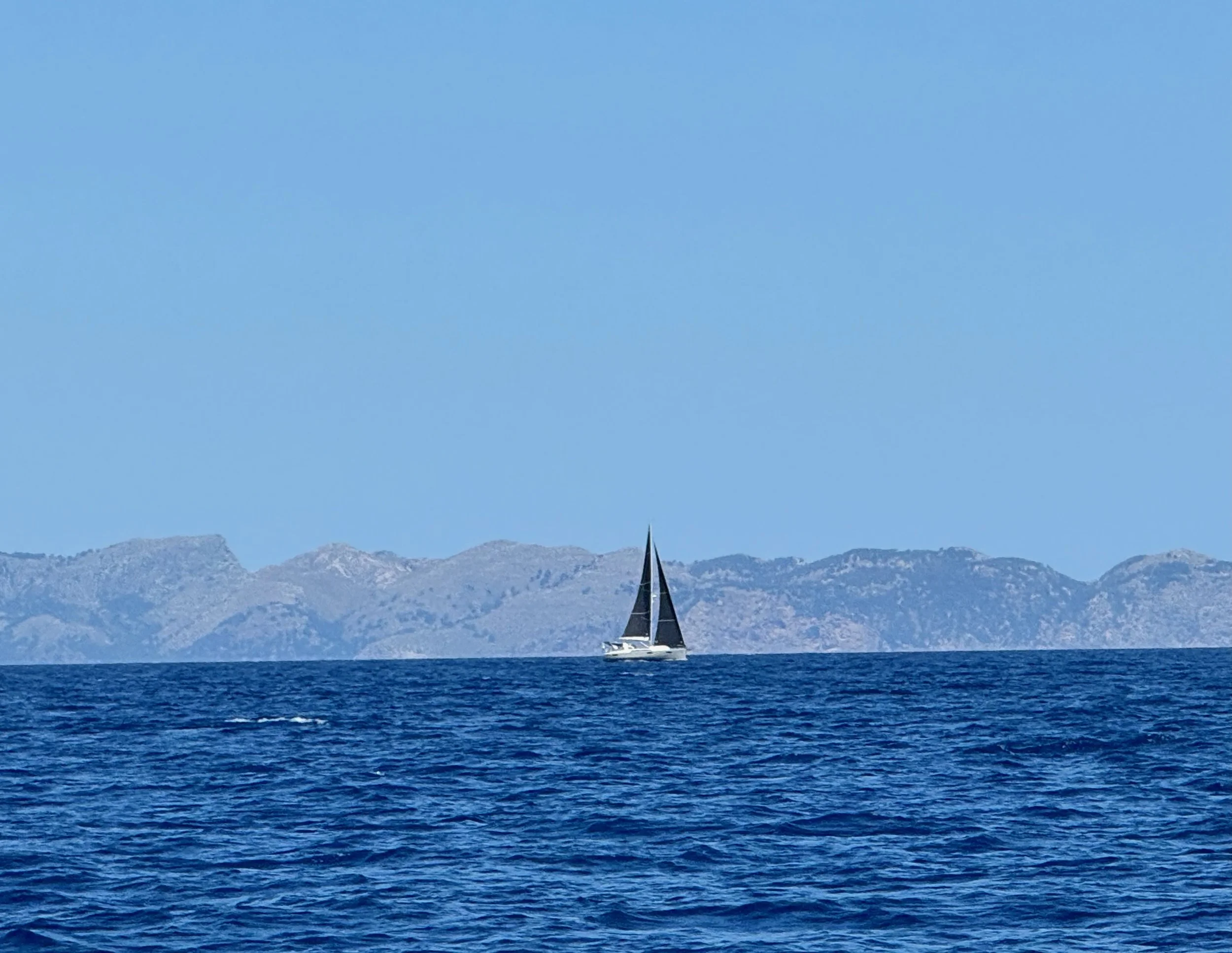
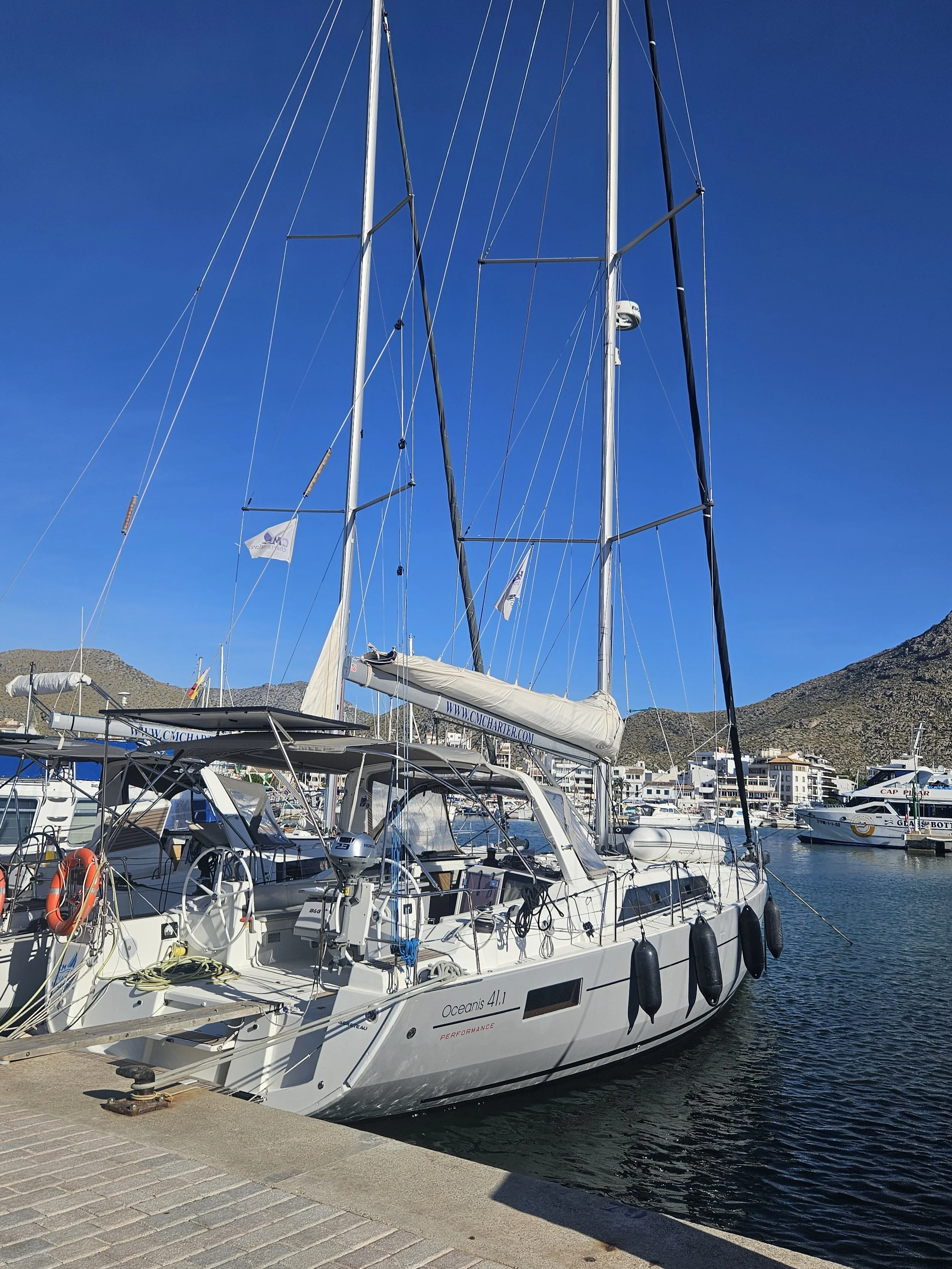
Passepartout and her black sails
Originally announced for September, 2020, it was as if the trip to Spain was cursed from the start. Even a year later, as the pandemic waned, we were not convinced that everyone could get to Spain. And after several poor experiences with the charter company, we agreed not to use them, so Mallorca was off the table until we could find a new source of boats.
Finally, in 2025, SailMe Charters turned up with boats on Mallorca, but on the north side of the island in Port de Pollença instead of in the capital, Palma, on the south end near the airport. While this presented additional travel challenges, our initial interactions with the company were positive so we moved forward.
After filling two 45-foot sloops with four people on the waiting list we added a third, smaller boat to our fleet creating a total capacity of 17 people. There was the usual churn in the months before the trip – a couple of people dropped out, more signed on, we re-arranged the crews to better distribute skills….
Finally we head for Spain. Some folks traveled early to spend some time on the island, some flew in the day before we boarded the boats. One by one we heard from each participant as they shook off jet lag and found their accommodation either in Palma or Port de Pollença. Unfortunately, one skipper who had traveled early became ill and not able to make the trip. While he sought medical care, Trip Leader Mia contacted the charter company to ask for their help. We needed a replacement skipper within a few days. Without one, the three other people on that boat would have to move to the other two boats, creating undesirable overcrowding.
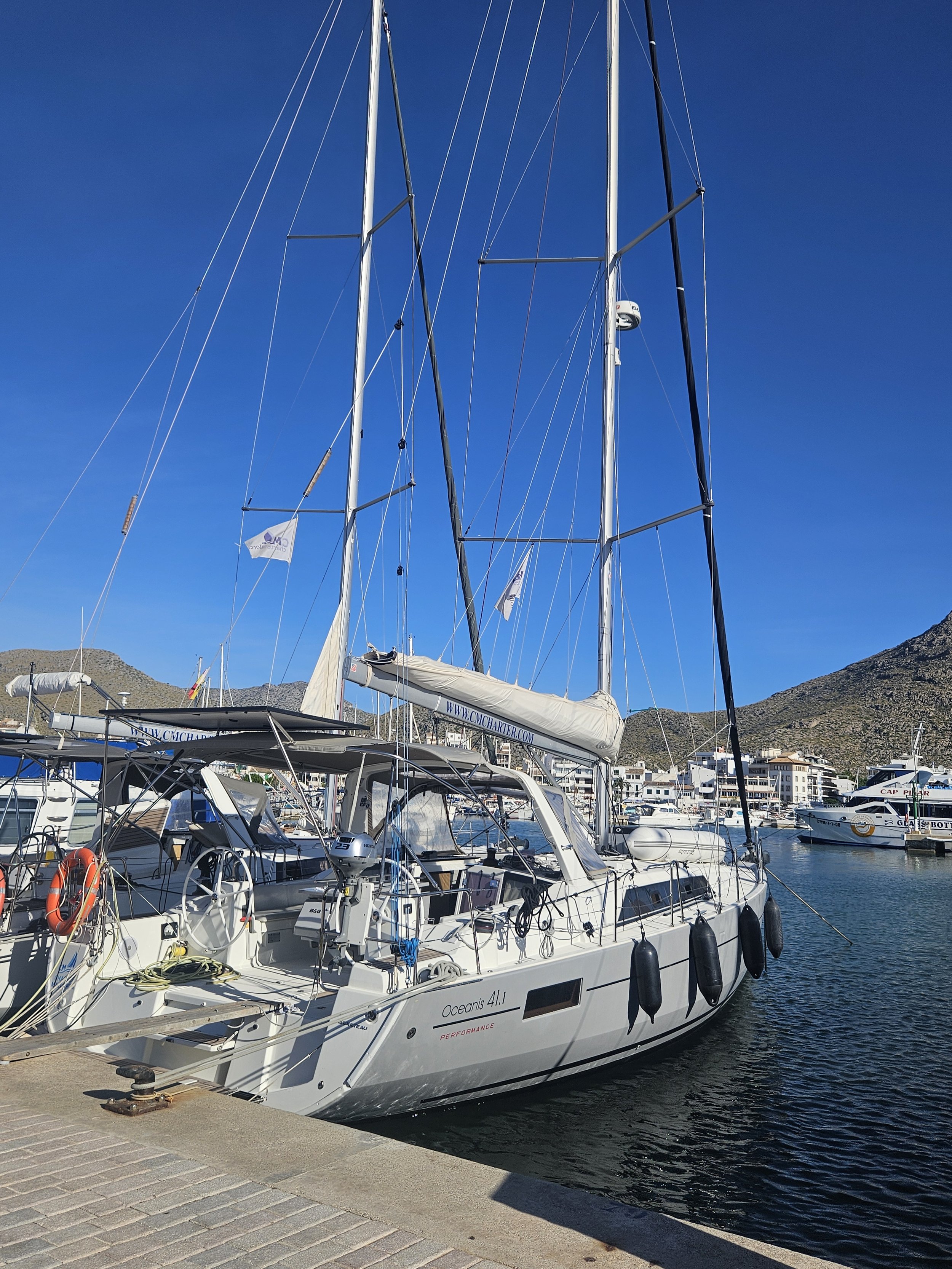
The next few days were a rollercoaster, with someone agreeing to do it, then cancelling, then someone else being possible, then not. Mia was at the supermarket buying provisions the day before departure when the charter company sent a message via WhatsApp saying they needed to talk to her right away. They had a possibility, but the person had to get from Andorra to Mallorca by the following morning, and they needed approval. Mia got back to the dock as quickly as she could. After a short conversation by phone with the base manager, who was somewhere on a sailboat, the arrangements were made and approved. We had a third skipper!
Sofiie arrived on Sunday morning. She’d driven from Andorra to Barcelona, then flown to Palma where someone from the charter company met her to drive her to the boats. Sofiie was a bundle of energy and local sailing knowledge and we were glad to welcome her aboard. Early in the afternoon the three boats motored off the dock, the two larger boats skippered by Mia and Bob and the smaller one skippered by Sofiie. The wind was about ten knots from the northeast and the sail along the north coast of Mallorca to Es Caló was lovely.
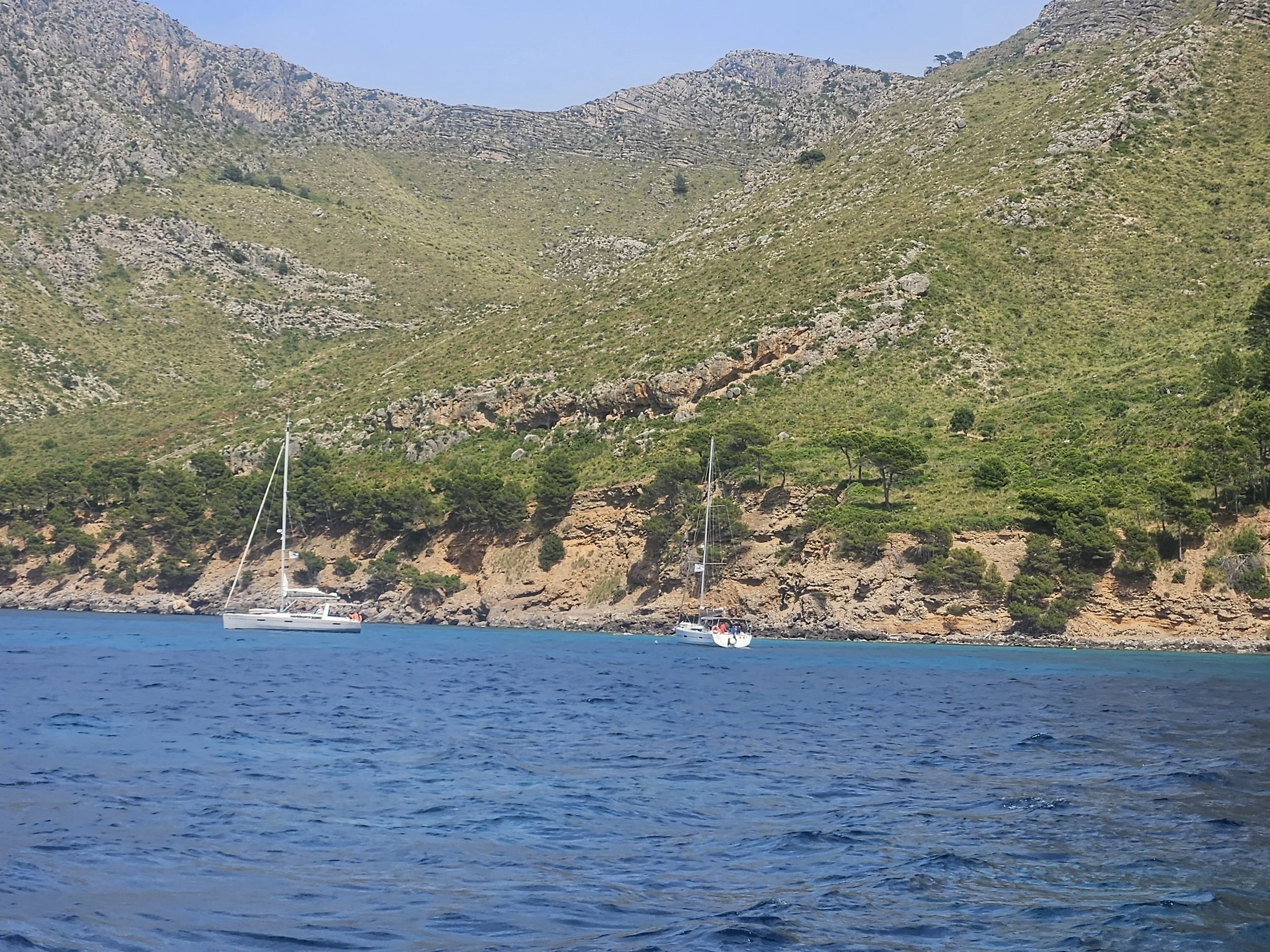
Rolly anchorage at Es Caló
But even as we approached this planned first anchorage, we were apprehensive. Cala Es Caló , situated on the west-facing side of a peninsula, is home to beds of Posidonia oceanica, a protected seagrass. The fine for anchoring – even having your anchor or rode touch – the grass is 1000 euros. As we approached Cala es Caló we saw many small boats there along with a few sailboats about our size. That was promising, however, it soon became clear that the remaining open space was the designated protection zone, and even though we could see big patches of sand, it was a risk to anchor there. Sofiie checked out some spots further south on the peninsula while Mia and Bob checked closer to, but outside of, the protected zone. They settled on that area, where a powerboat was already anchored.
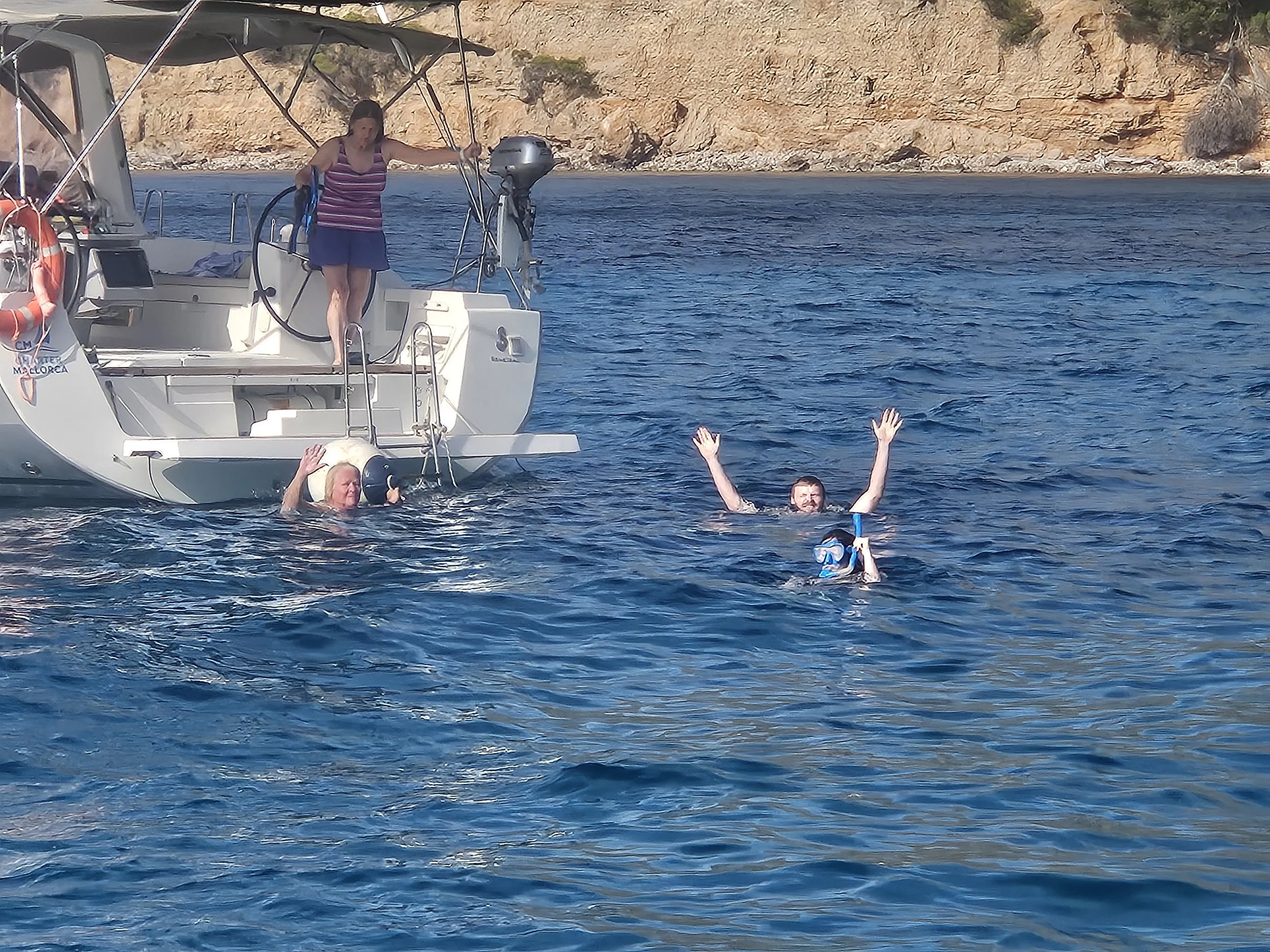
The crew of Avalon could not wait to jump in
The holding in sand was excellent. They were soon anchored and everyone on Mia’s boat went for a glorious Mediterranean swim. This was to have been the traditional appetizer – tapas – dinner, but none of the skippers were in the mood to move their dinghies off the bow and mount the outboard engine, so we agreed to postpone that party.
As evening came the wind died down and the boats began to shift with the current. Now the swells curving around the end of the peninsula had free reign to rock us to sleep. Or not. Very few of the crew actually slept that night as the boats heaved side to side and back and forth on the random swells.
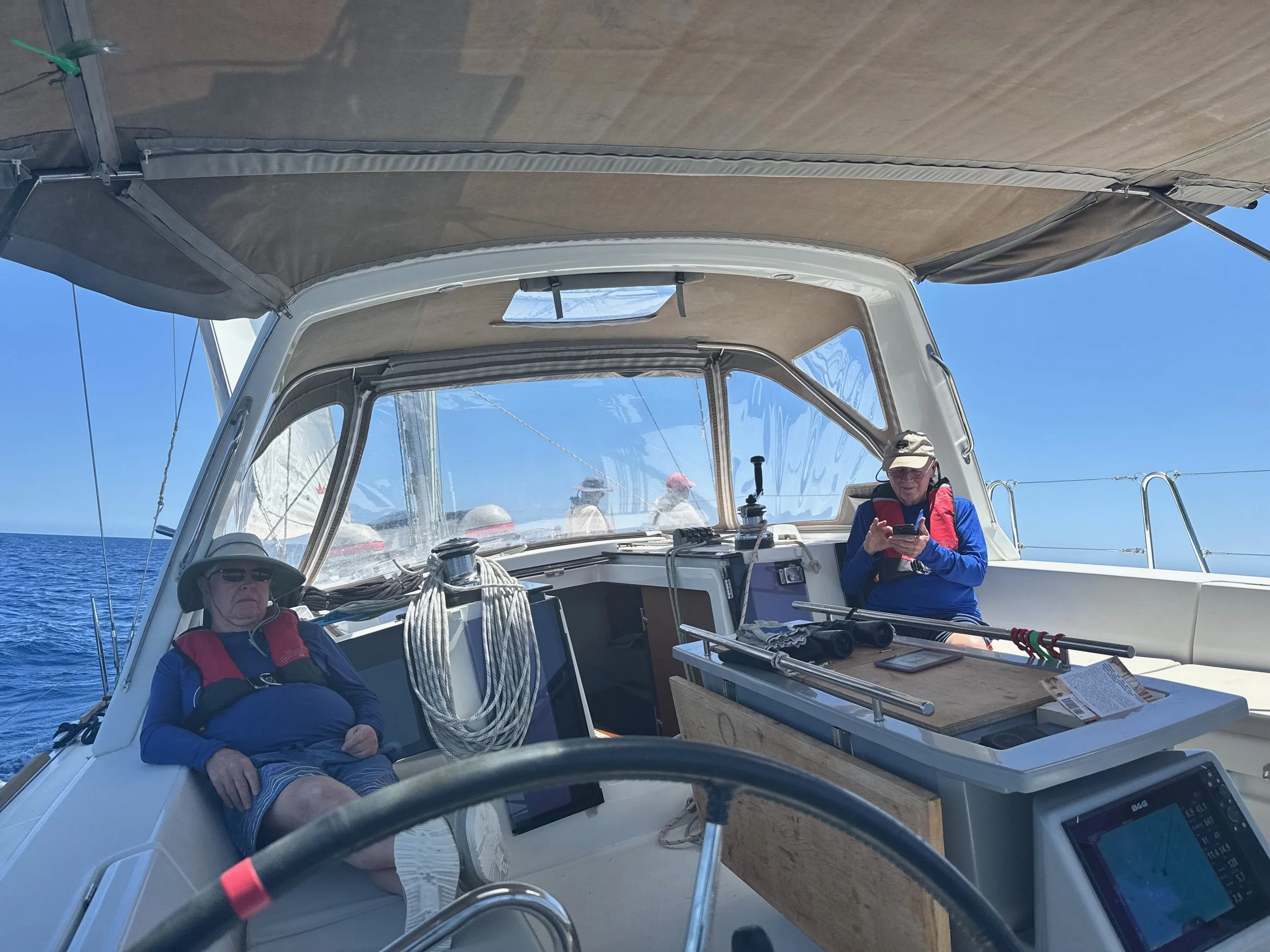
Joe and Dave endure the sail to Menorca aboard Avalon.
In the morning the skippers met via WhatsApp to discuss the plan versus reality. The nice northerly was now the Mistral, a wind generated in the Alps that sometimes rushes across the Med. In Turkey it’s called the Meltemi, in California, it’s the Santa Ana wind. No anchorage would be less rolly than Es Caló, and most would be worse. Availability of berths in the big port we had planned to go to for the next two nights was unclear. Sofiie confirmed that one of the two marinas there was closed due to construction. The other would not confirm availability until later in the day. If we sailed there and could not get in, we’d end up anchored in an exposed, rolly anchorage.
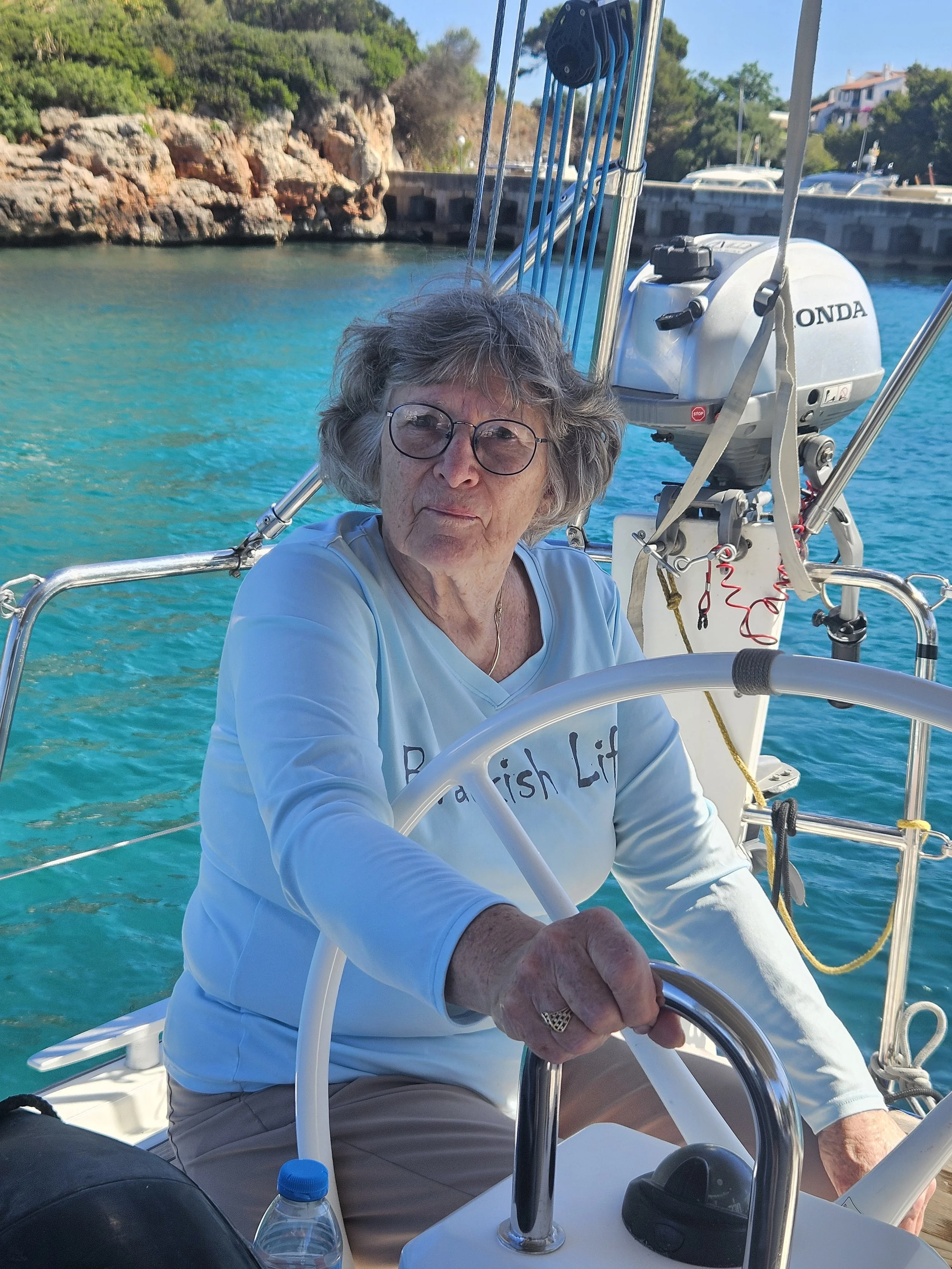
Judy aboard Passepartout.
Sofiie was able to get confirmation from Club Nautico in Ciudadella. But Ciudadella is on Menorca, the next island north. By taking that option we were throwing out our planned itinerary. However, the comfort and safety of our crews was what mattered, and we agreed that’s what we would do.
Amusingly, the charter company had been surprised at our planned itinerary, saying everyone who charters their boats goes to Menorca. So the stubborn Americans were getting in with the “in crowd” after all.
The twenty-six miles to Menorca’s west coast offered a great sail. The boats handled well and the crews took turns steering and handling sails. This was what we came for!
The entrance to Ciudadella is a long, narrow inlet between impressive rock bluffs. A very old tower on one point once protected the port from attacks from the sea. We became very familiar with those bluffs and that tower as we “milled about smartly” at the entrance waiting for the okay to enter the narrow channel. Sofiie with her command of multiple languages managed to make them understand over the VHF that we were there, although even she said she couldn’t understand most of what they were saying. Passepartout soon disappeared into the winding channel. Bob somehow got through to them to announce his boat, Rubin, was waiting. He called a couple times, and eventually they told him to come in. It was obvious they had to help each boat get Med-moored to the seawall before having another come in.
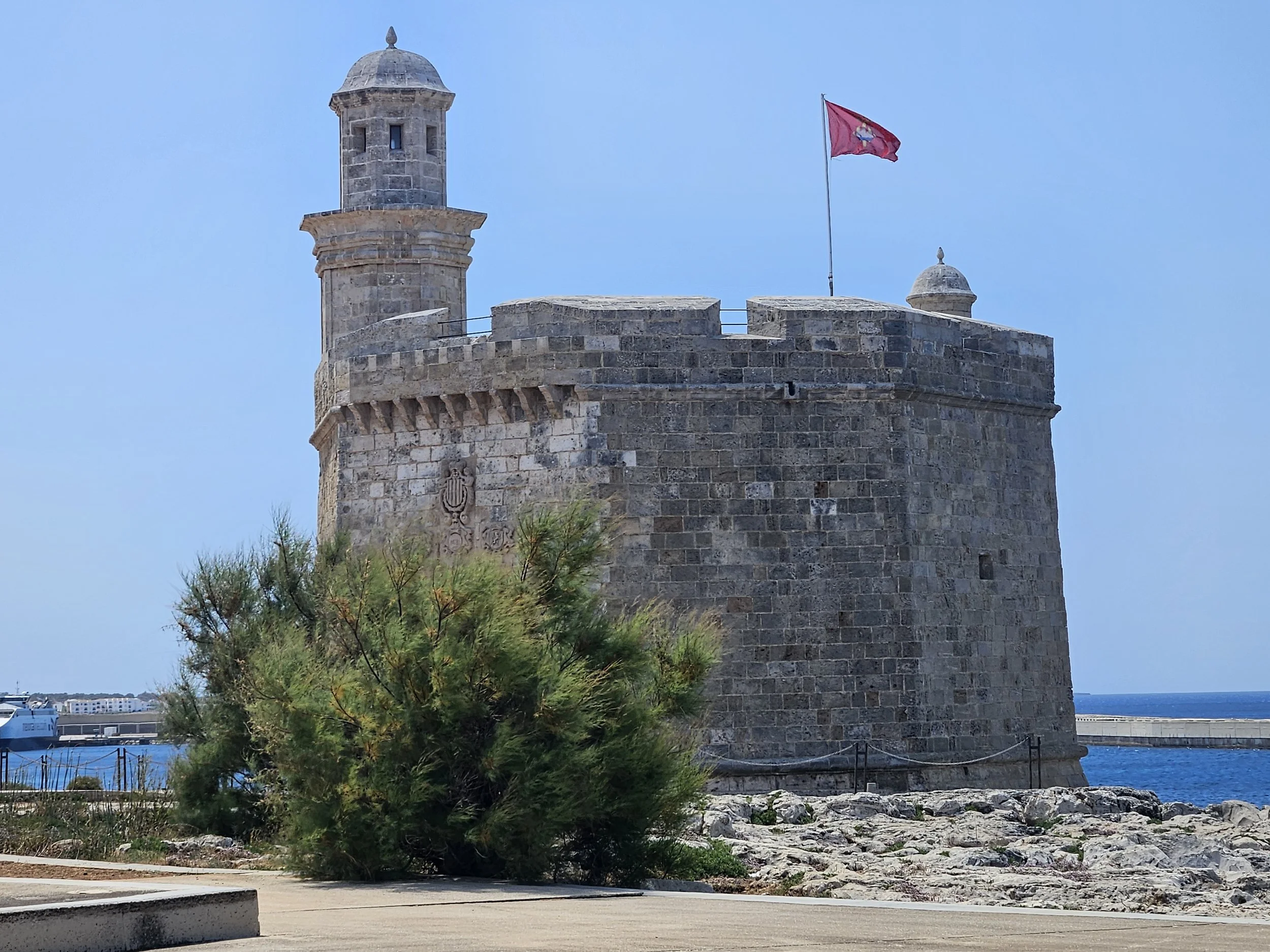
Castel de Saint Nicolau at the entrance to Ciudadella, Menorca.
Aboard Avalon, Mia and crew continued to circle, calling on the VHF occasionally – trying to keep them aware of her without being annoying. Time passed, the crew memorized the sights – the swimming hole on the port side looked very inviting. The steps up the bluff to starboard to a nearly invisible door were fascinating. Other boats came and went. Finally Bob sent a WhatsApp message “Avalon come in.”
Avalon headed in past rows of boats Med moored on the starboard, and many boats on docks on the port. There was no sign of Rubin and Passepartout. Mia was beginning to fear being able to turn around if she overshot when finally a crew member spotted some of the other boats’ people waving. We were directed to an open spot where a dockhand shouted unintelligible instructions that clearly meant “back in here.” Teeth gritted, Mia complied with judicious use of forward and reverse and liberal use of the bow thrusters. The crew handed stern lines to the guy on the dock, and suddenly Sofiie was there too. Someone handed crew members the mooring lines to put on the bow cleats to keep the boat from hitting the stone seawall.
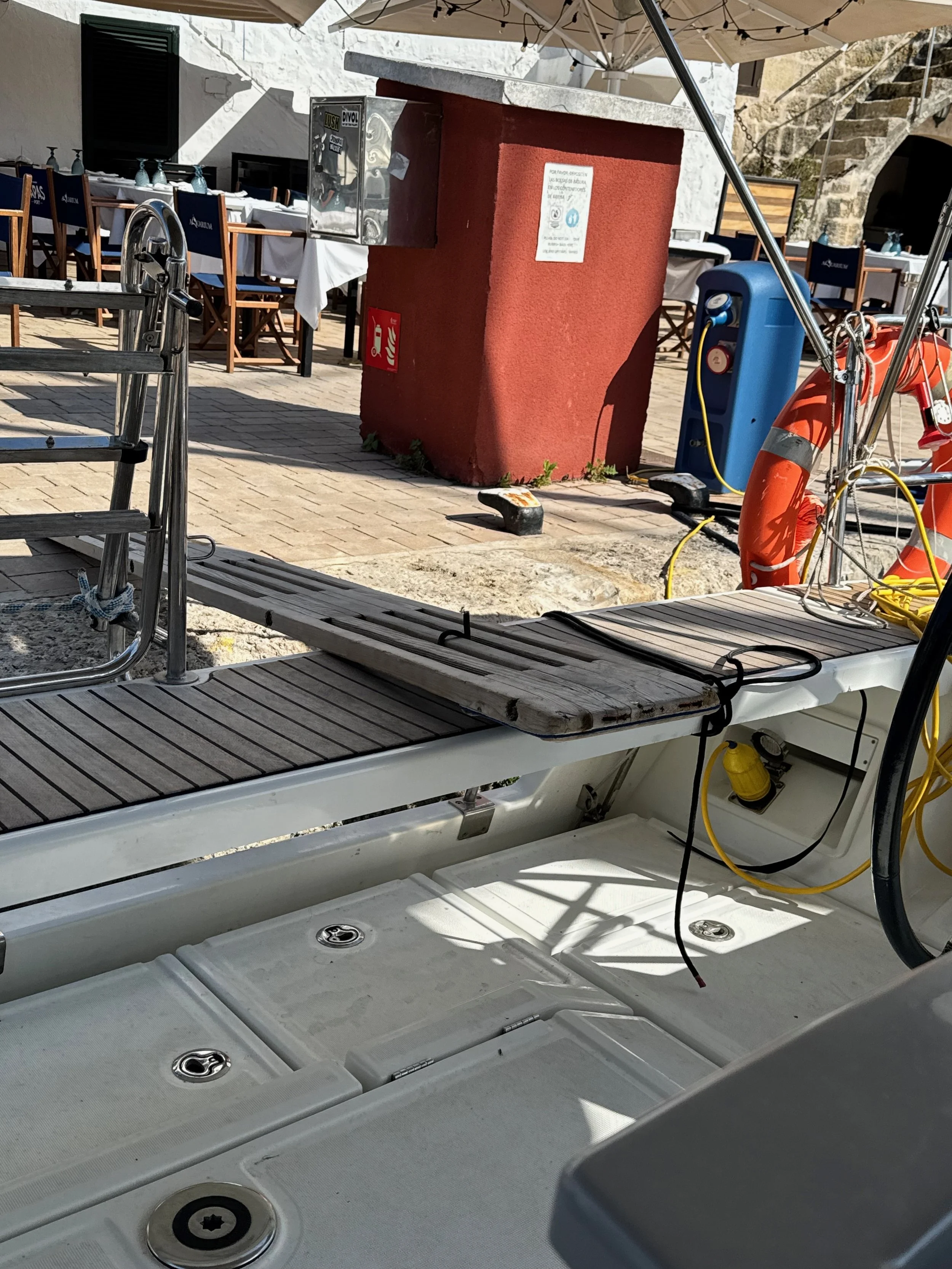
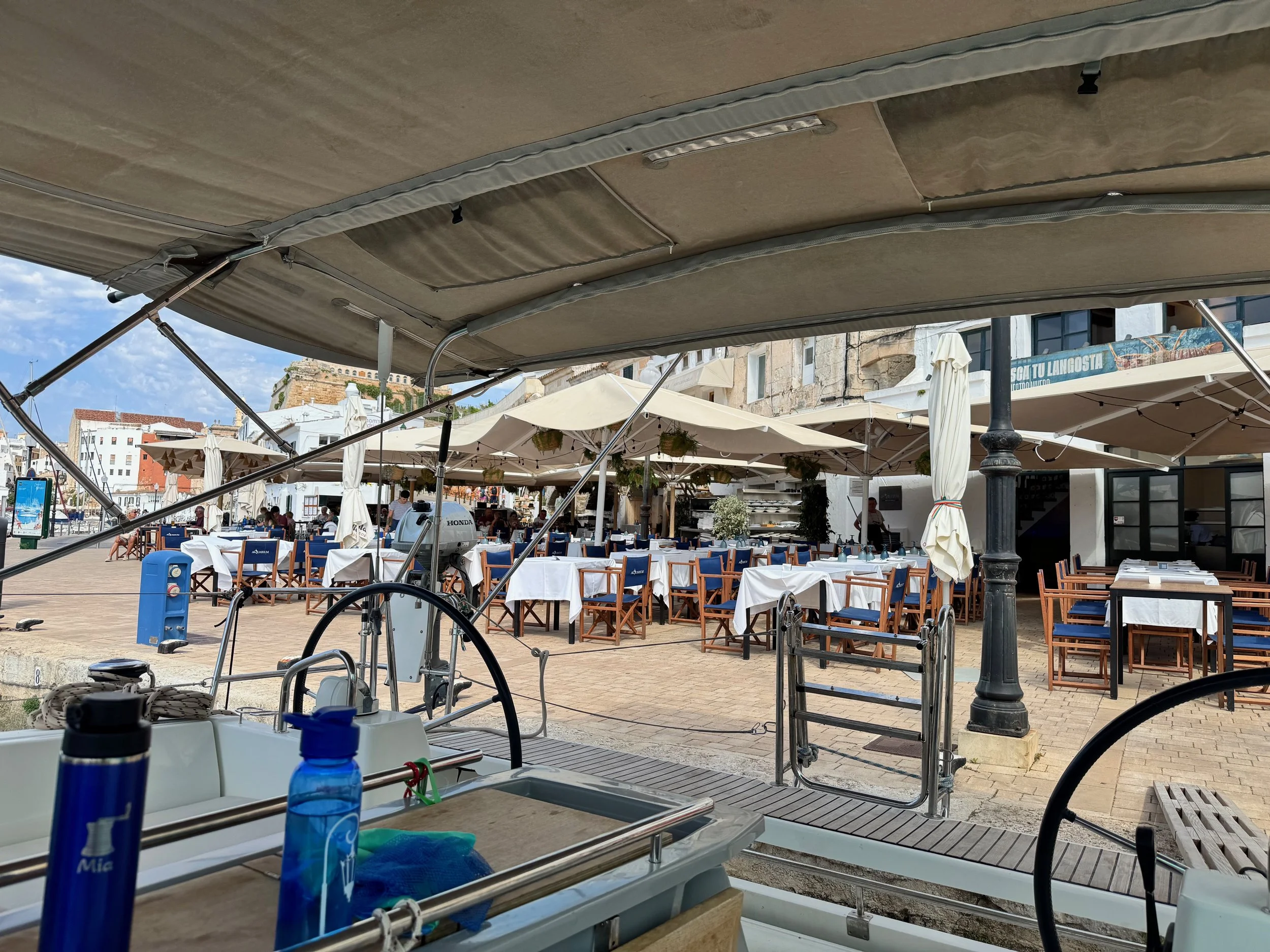
It turned out that one of the many boats that had passed Avalon out at the entrance had slipped in and taken her spot next to Rubin, which was why nobody had called us in – they were busy with that boat. Bob had taken the initiative lest another boat get by and take the last spot.
And so we were Med-moored at Club Nautico in Ciudadella on Menorca, where we never planned to go.
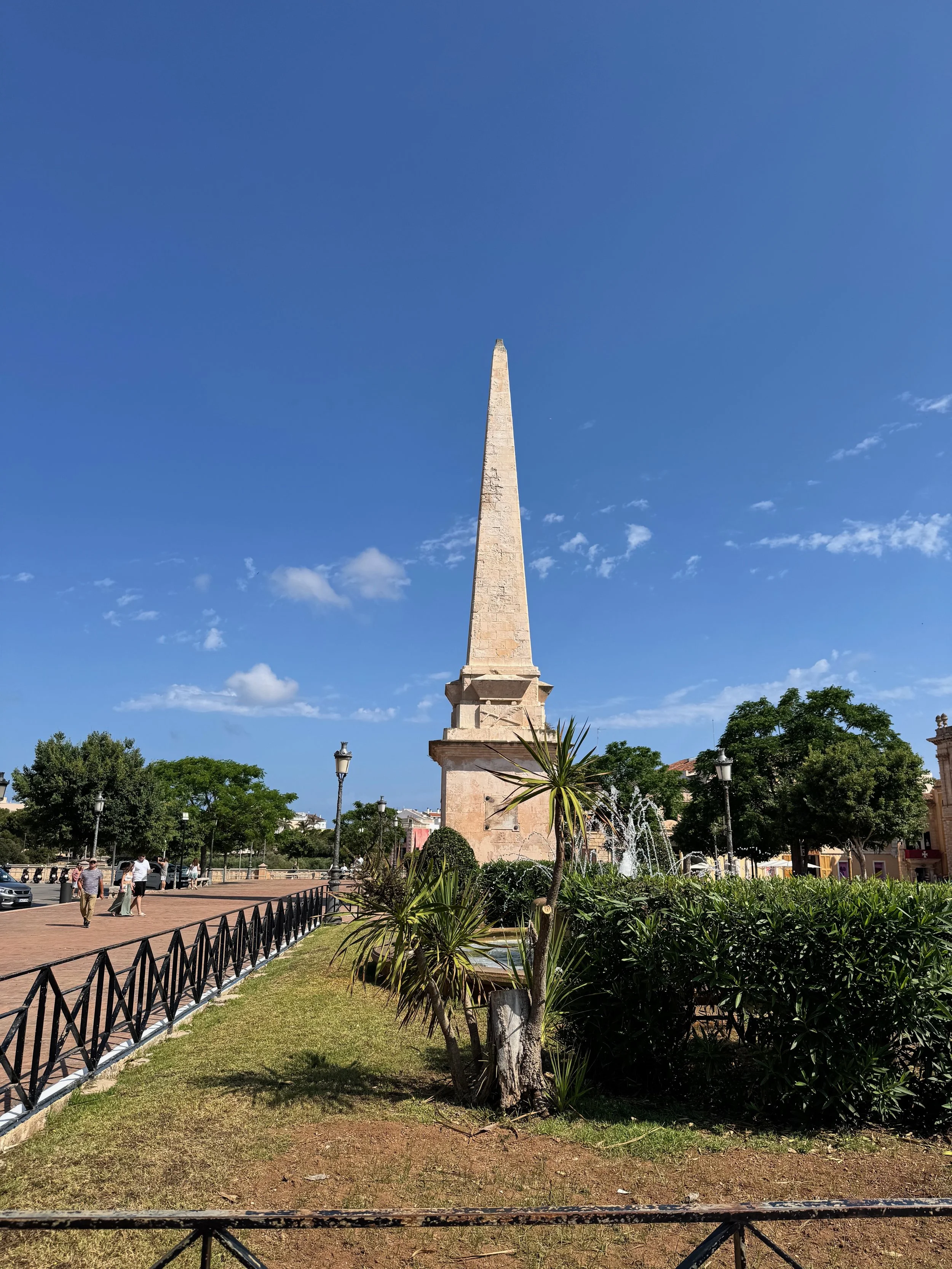
Ciudadella is a very old city on a much older island. Menorca has more than 1000 ancient burial sites of various types and in various conditions. It has survived sieges and wars and navigated the Spanish revolution. Today it is a popular tourist destination. While street signs are in Spanish, museums and historic sites, and the tourist information office, offer a mix of German, English, French, Italian, and Catalan descriptions of exhibits.
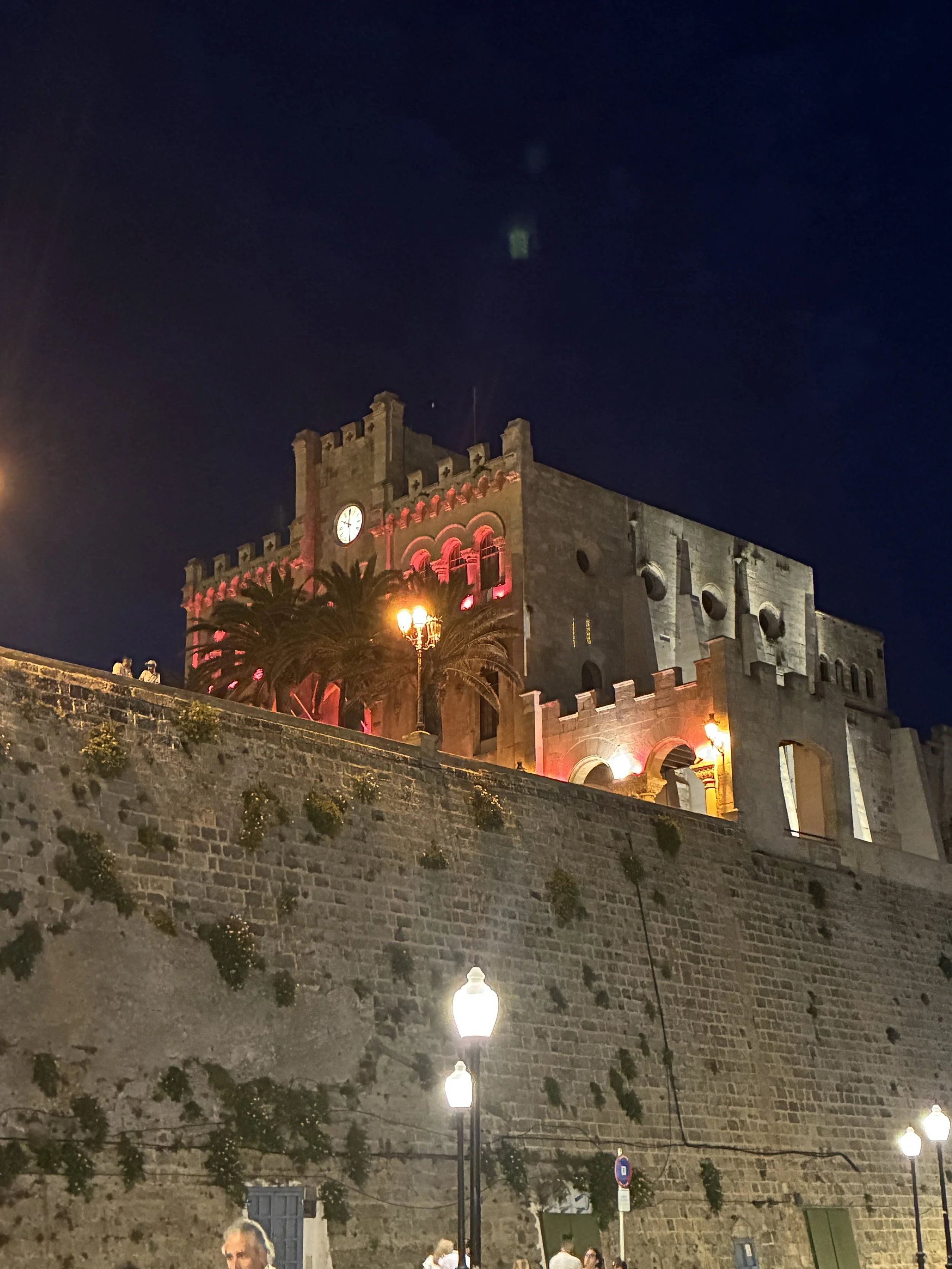
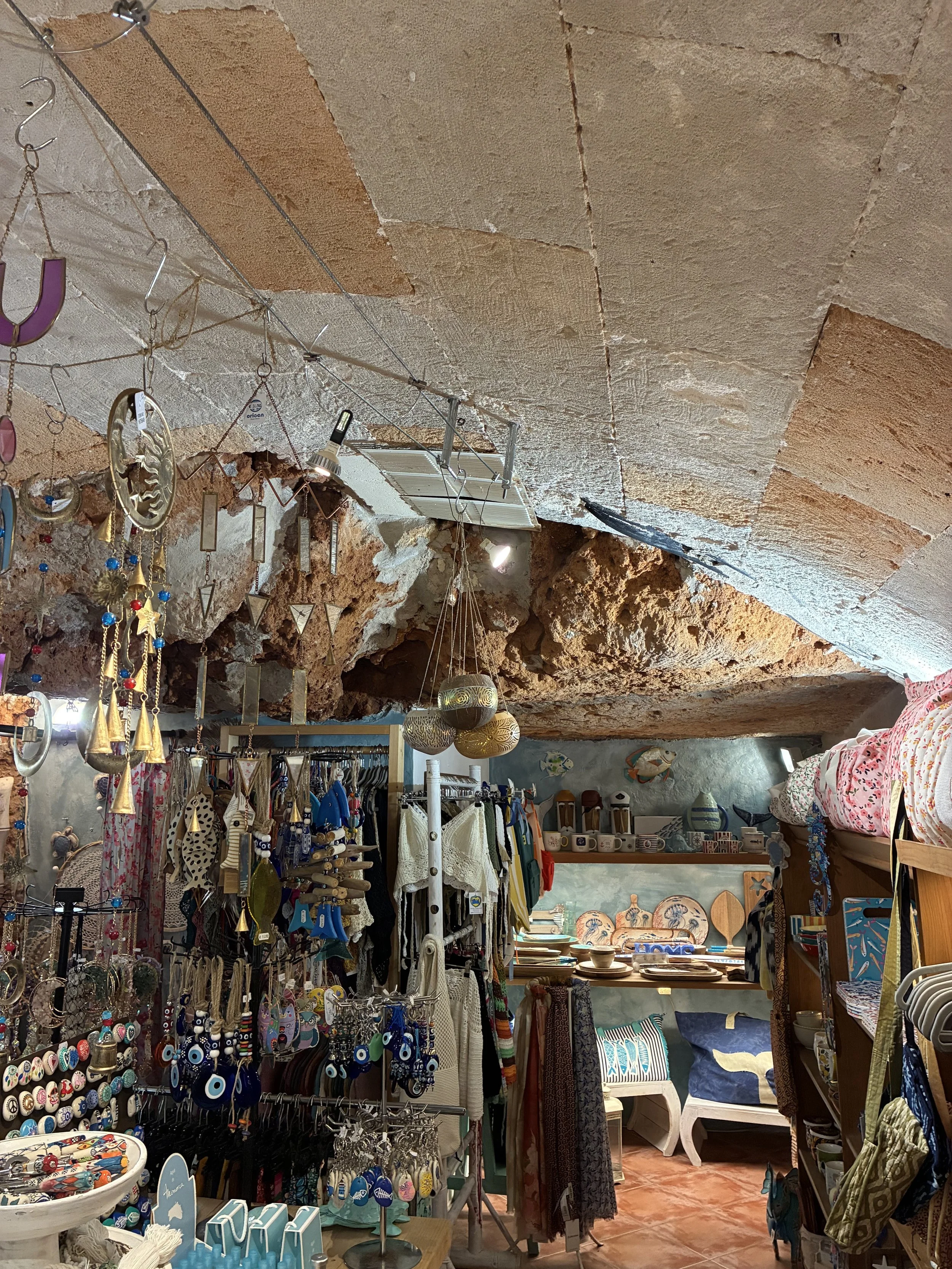
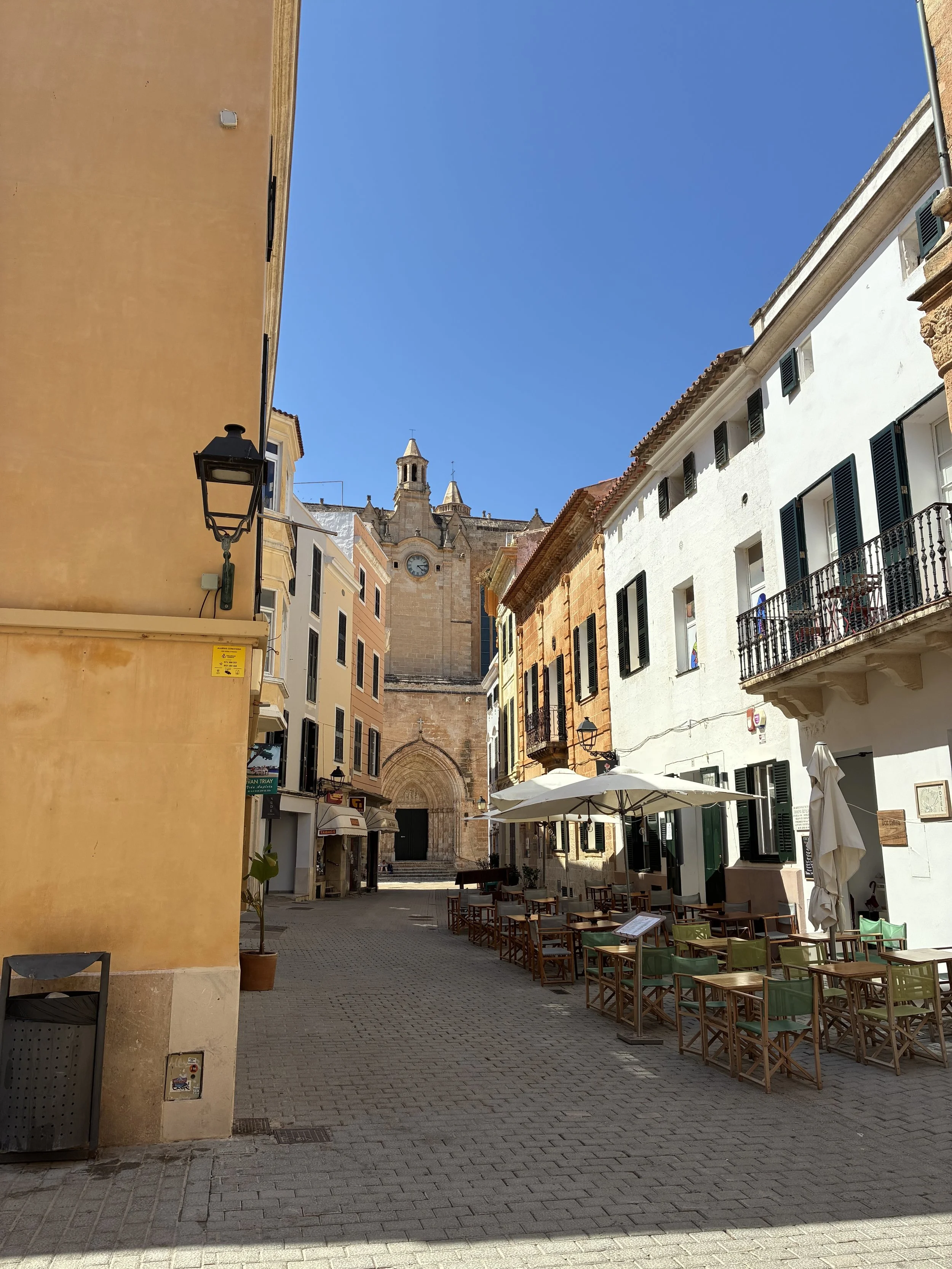
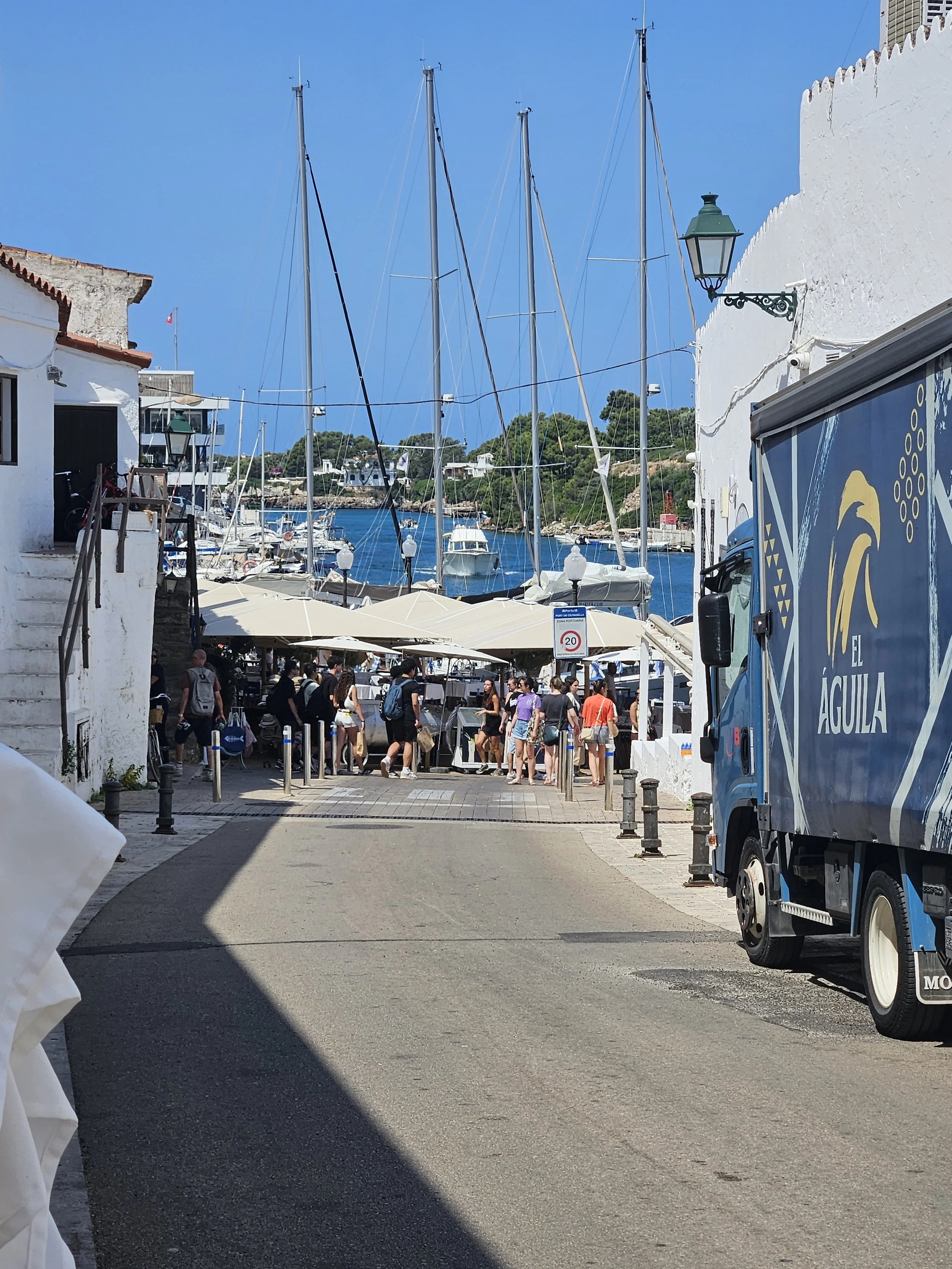
The wharf we were tied to is lined with restaurants and a few shops. That first night we all dined at the one directly off our sterns, Aquarium. The seafood was fresh, the other dishes were delicious, and the prices were reasonable. Heaven for exhausted sailors.
In the morning the skippers met and interpreted the weather. The Mistral was getting stronger. Mia and Bob had held hope of leaving the city to anchor in one or two of the beautiful coves along the south coast of Menorca – after all, the wind was from the north, right? But no, the predicted swells in each of these bits of paradise ranged from .75 to 1.5 meters. All night. Worse than we’d experienced at Es Caló. So we told Club Nautico we were staying and they happily collected our fees, which were, in fact, pretty reasonable.
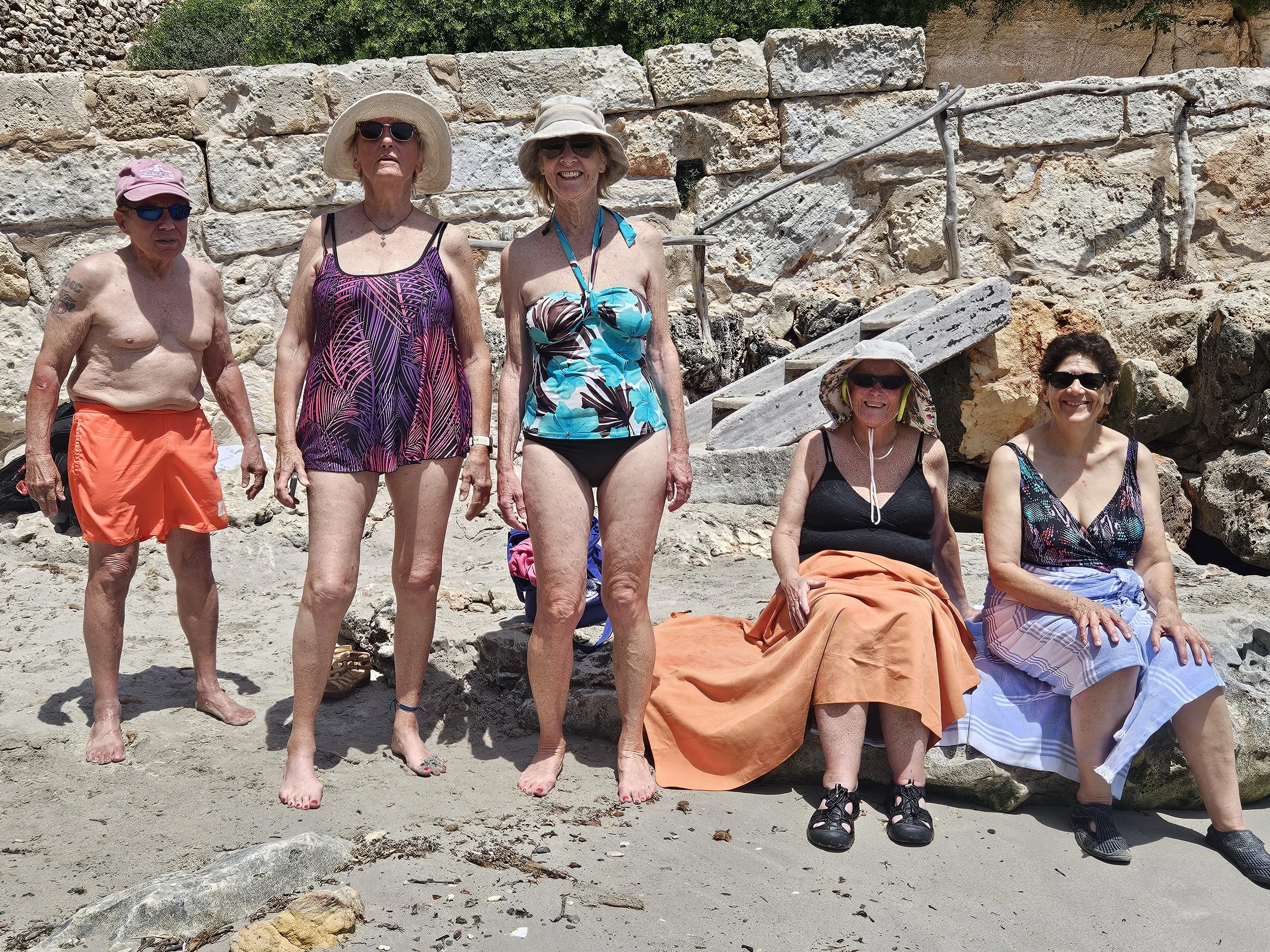
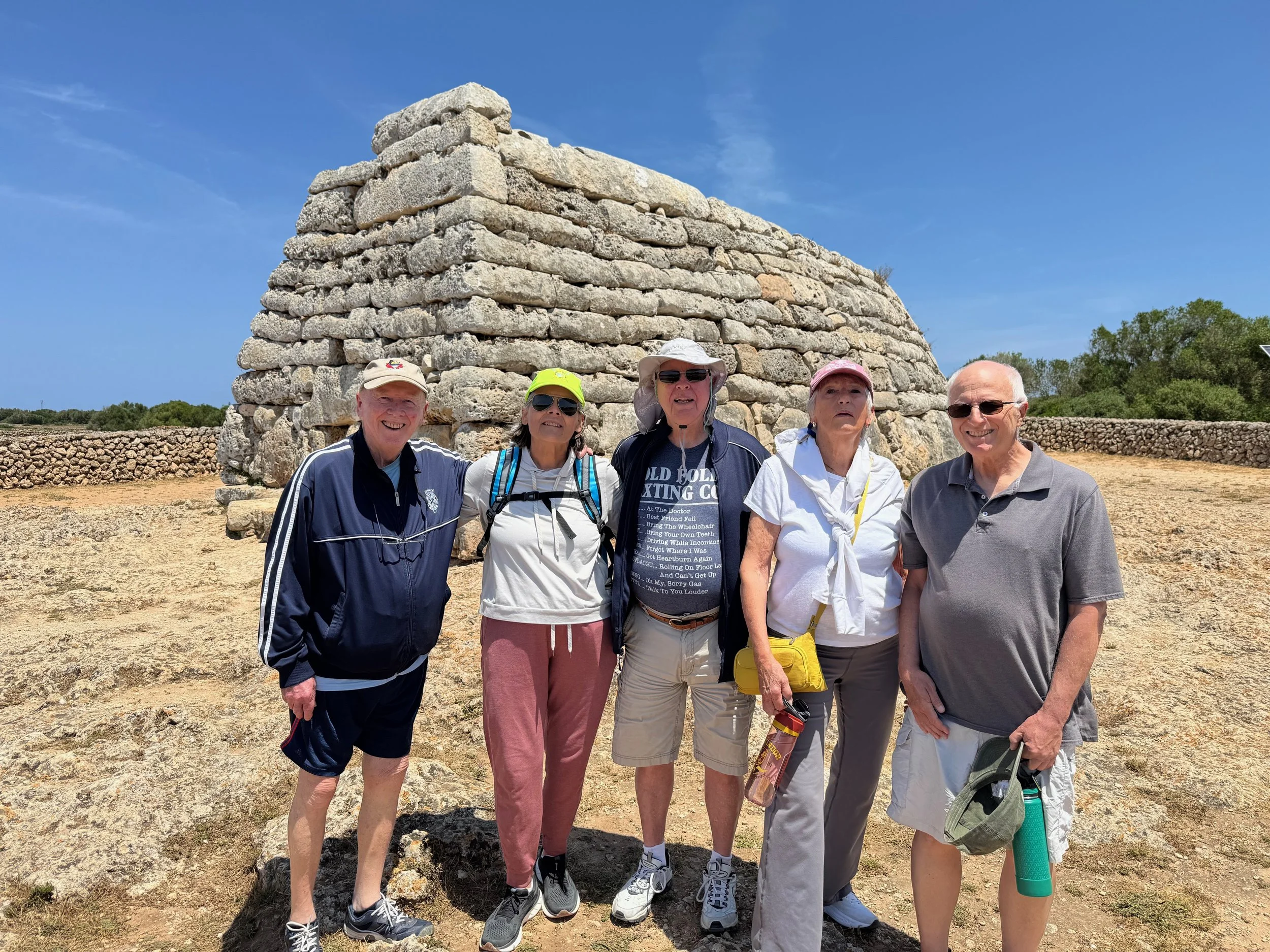
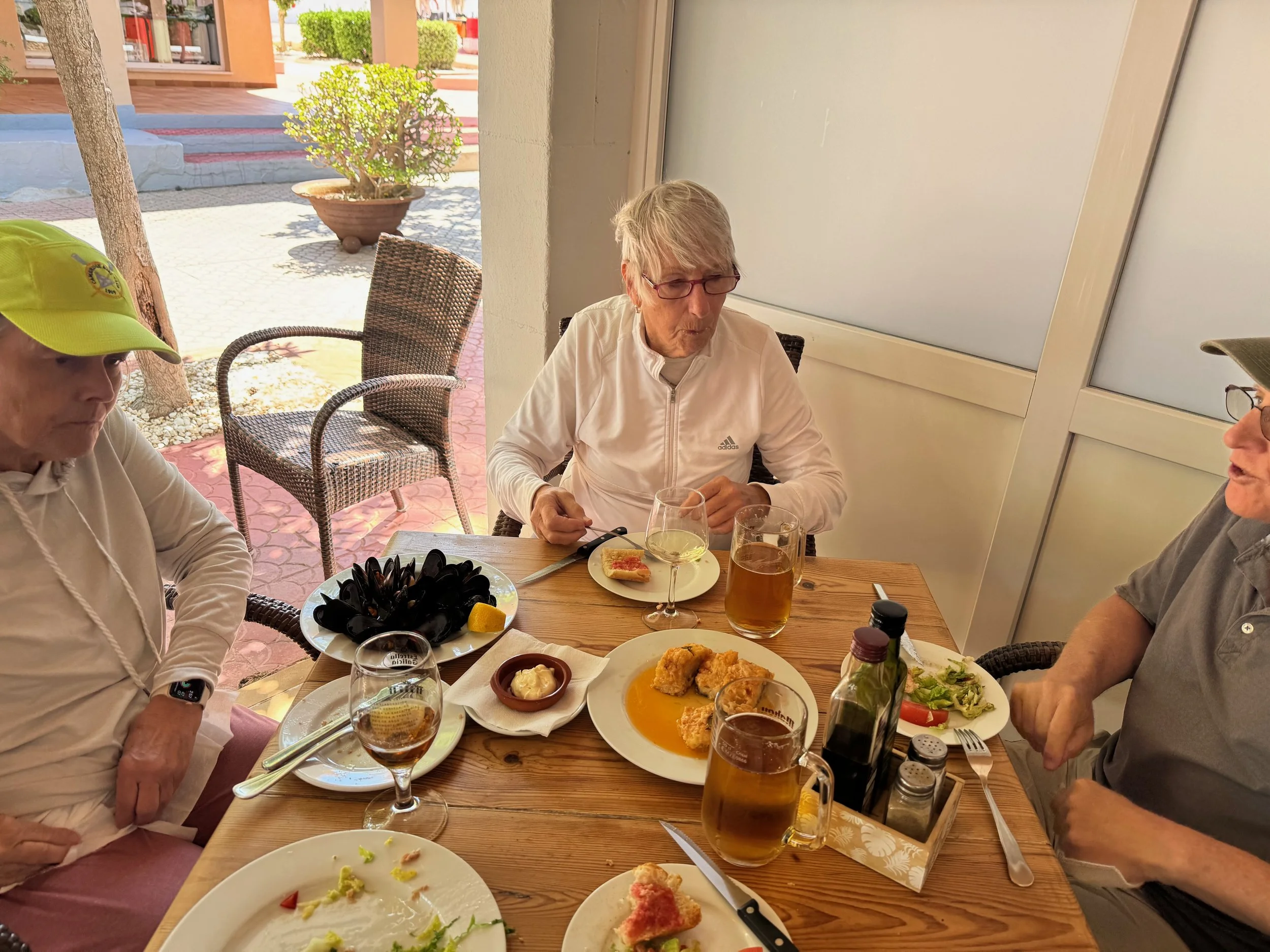
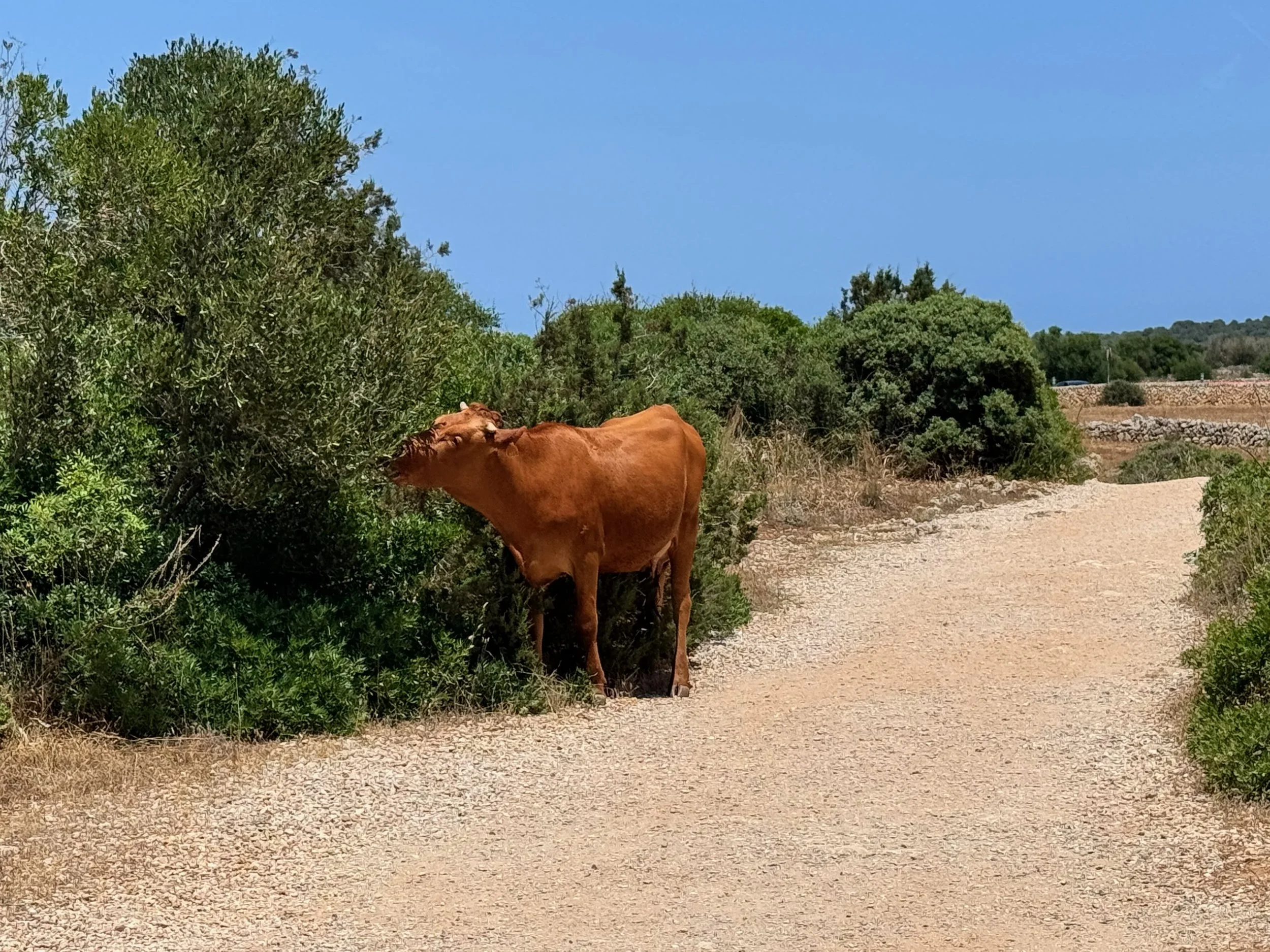
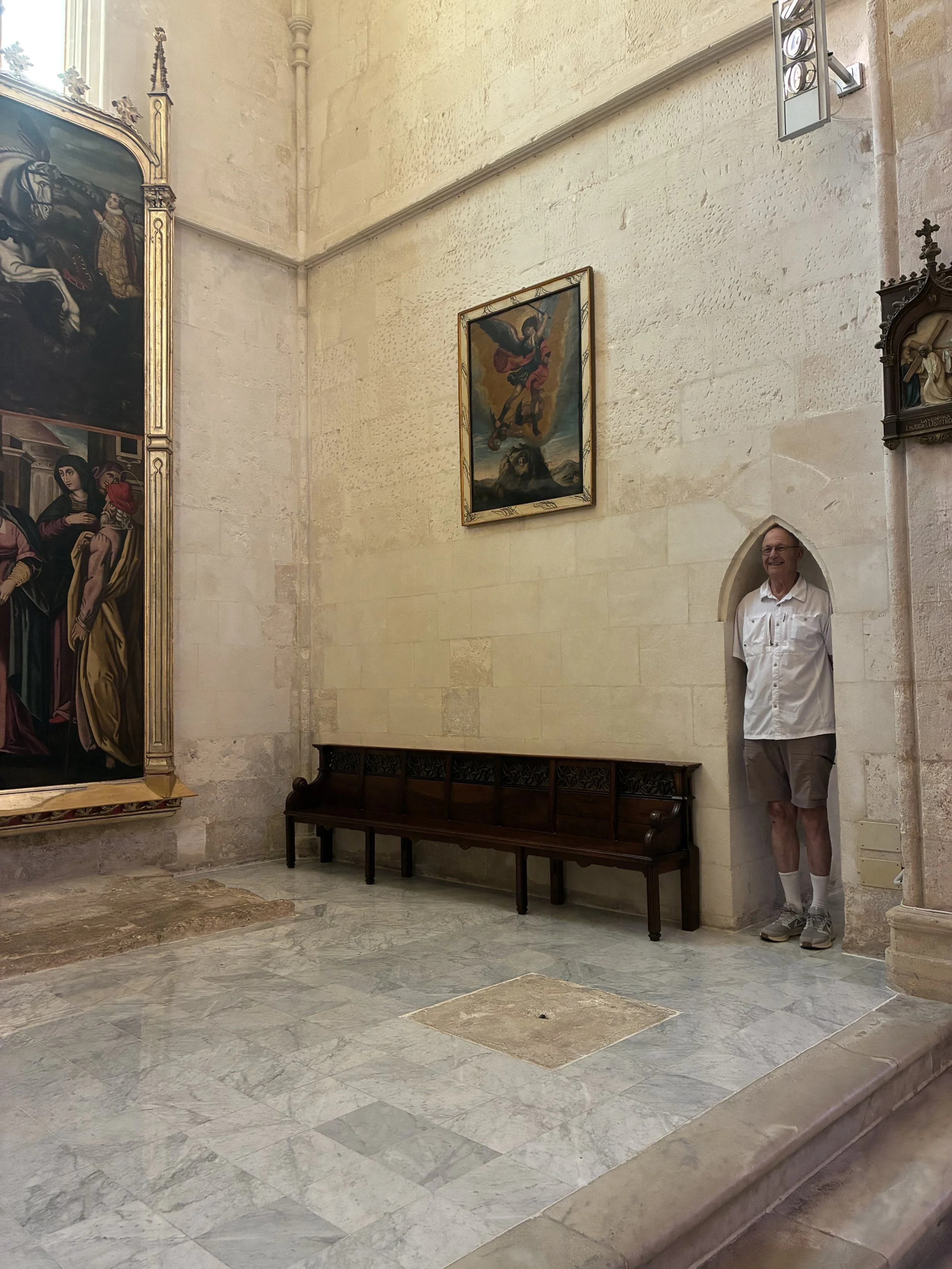
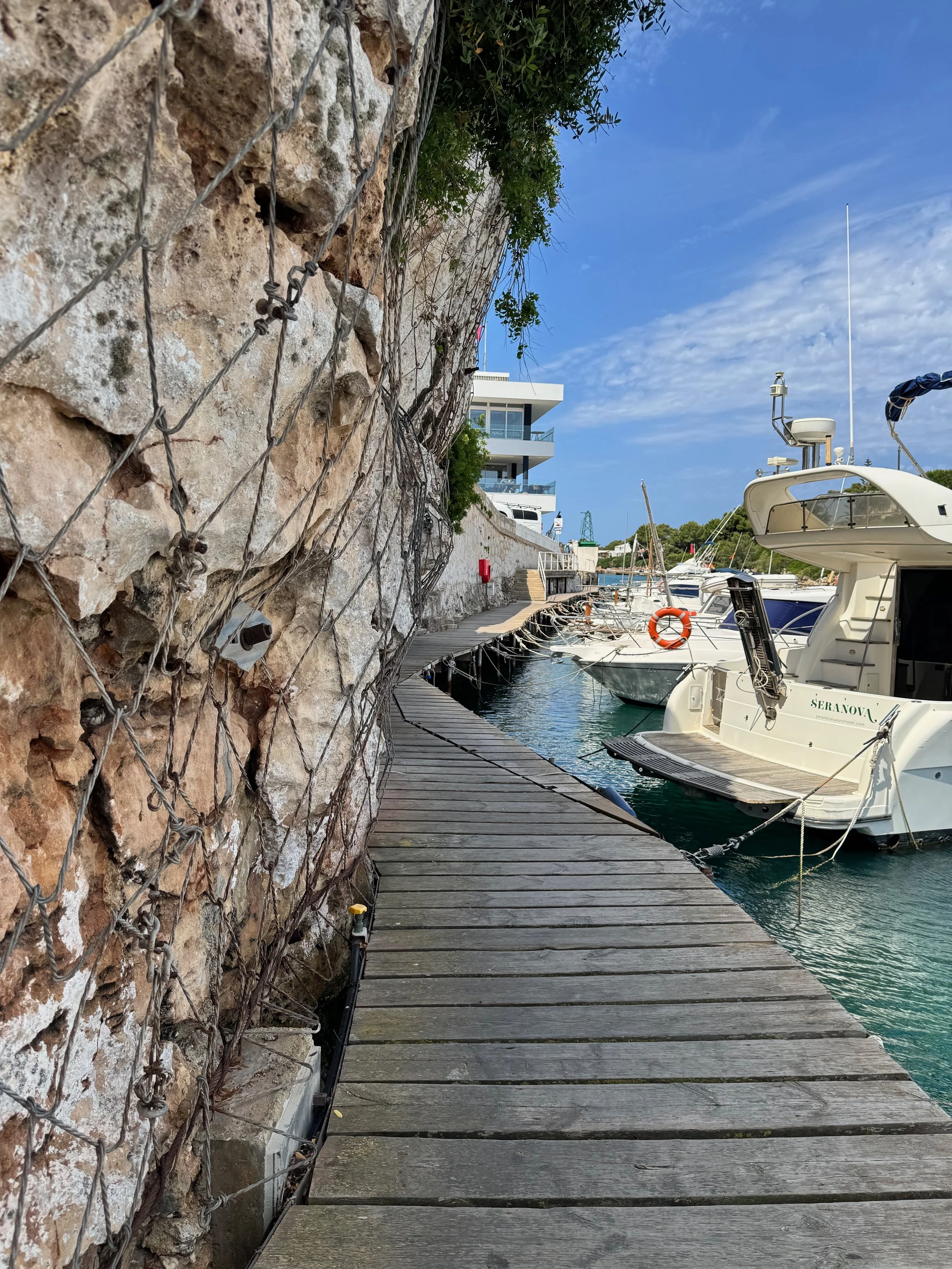
Crews set out to explore, some going to find that swimming hole we’d seen out by the point, some into the old city to see the sites, some just to wander. We learned just how much Menorca has to offer and were glad we’d come after all.
Everyone got better at crossing from the wharf to the boats using the gangways that had been very intimidating on Saturday.
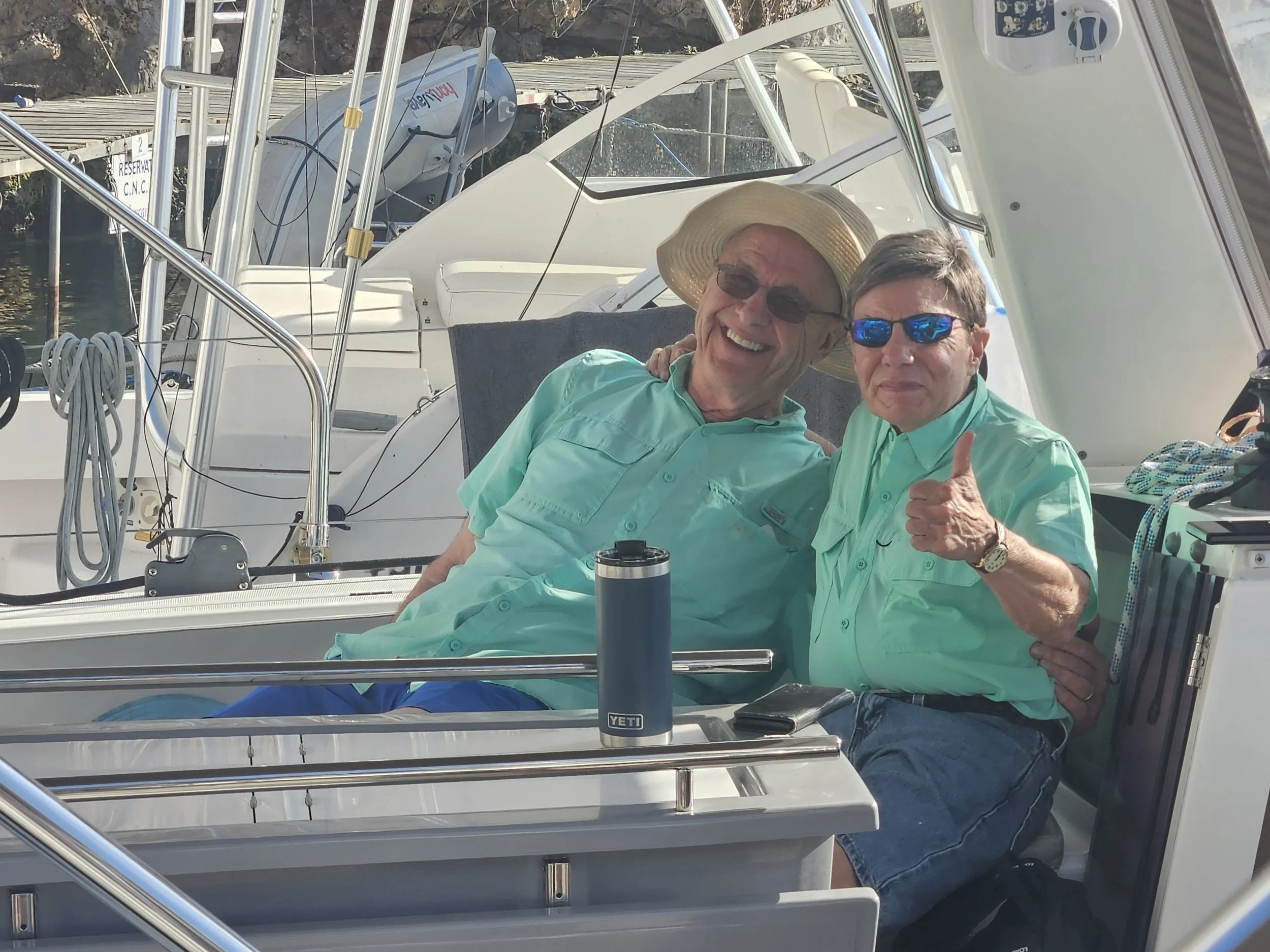
The long (Walt) and the short (John) of it.
The weather forecast persisted the following morning, with anchorages still untenable for folks not accustomed to rolling all night. And the morning after that. All hope of getting out to an anchorage was abandoned by Thursday. And yet, nobody was complaining about being stuck in this charming little town. Some rented bikes to explore some of the coast, another group used taxis to visit one of the ancient burial sites. Some wanted to tour a small cave in a suburb south of town, but it was fully booked. So they had a wonderful tapas lunch instead.
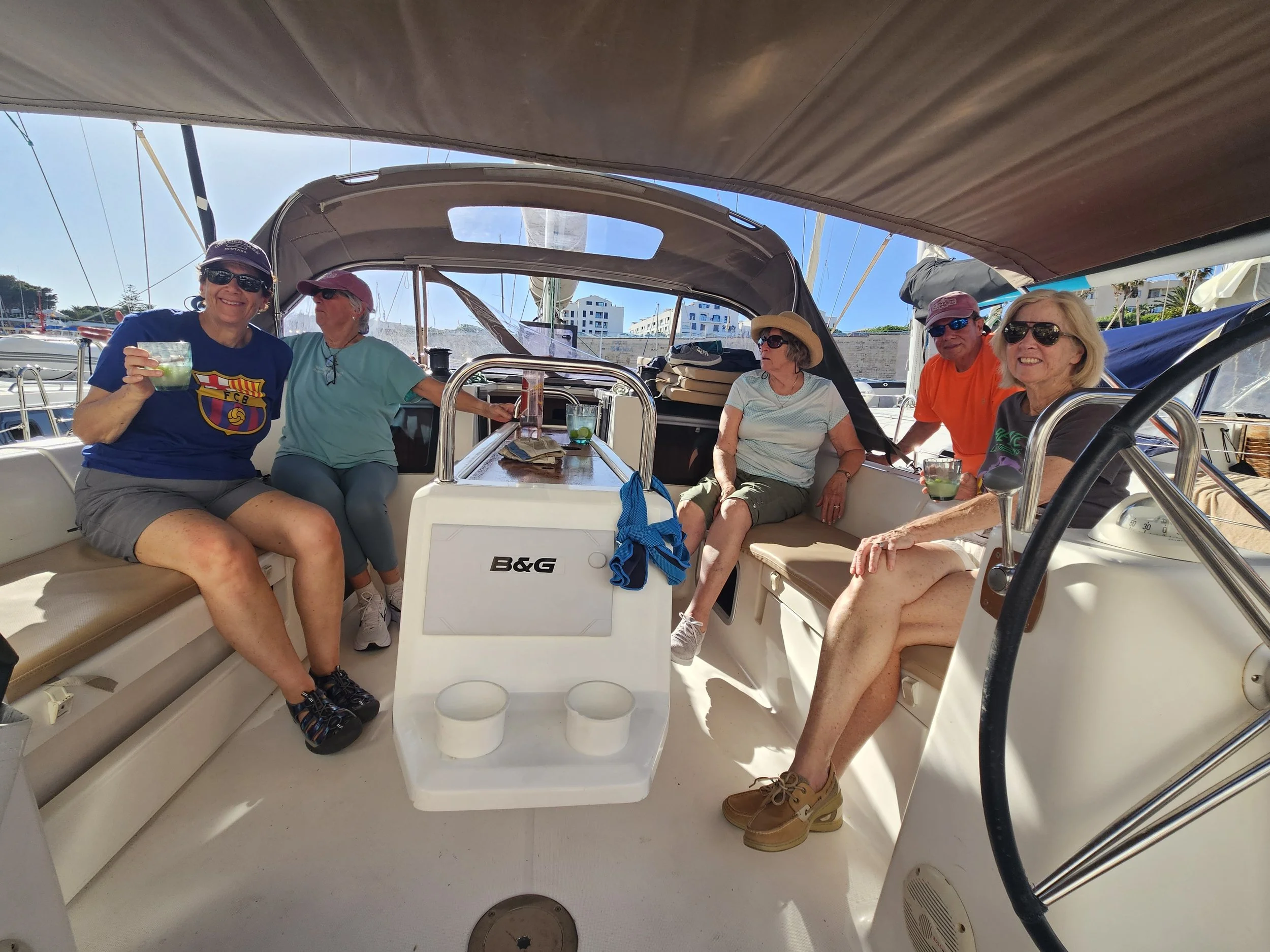
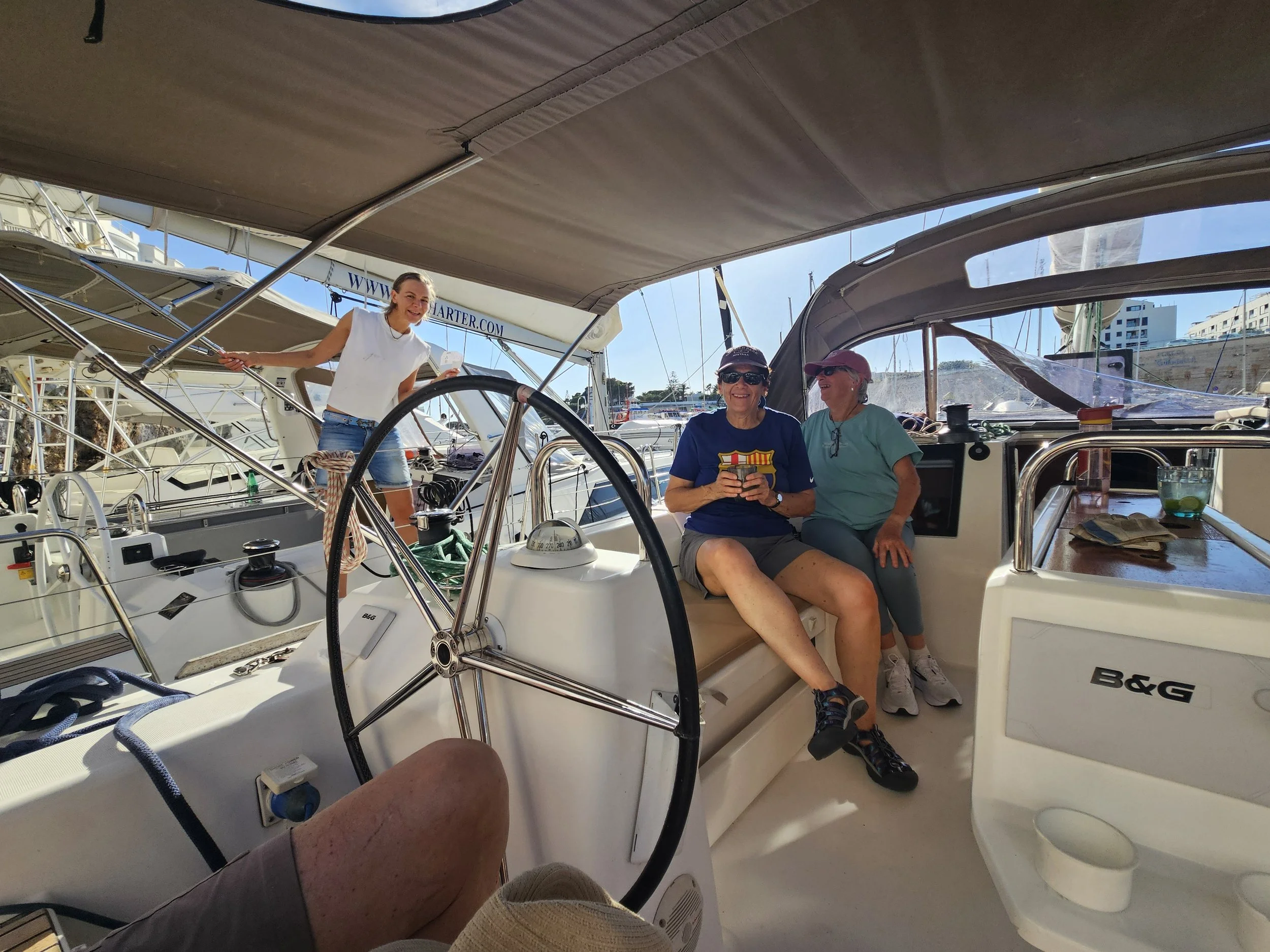
Many visited the cathedral and cloister in town, and the archaeology museum with its enormous collection of artifacts. It truly was not hard to find something interesting to do, even if it was just a little shopping.
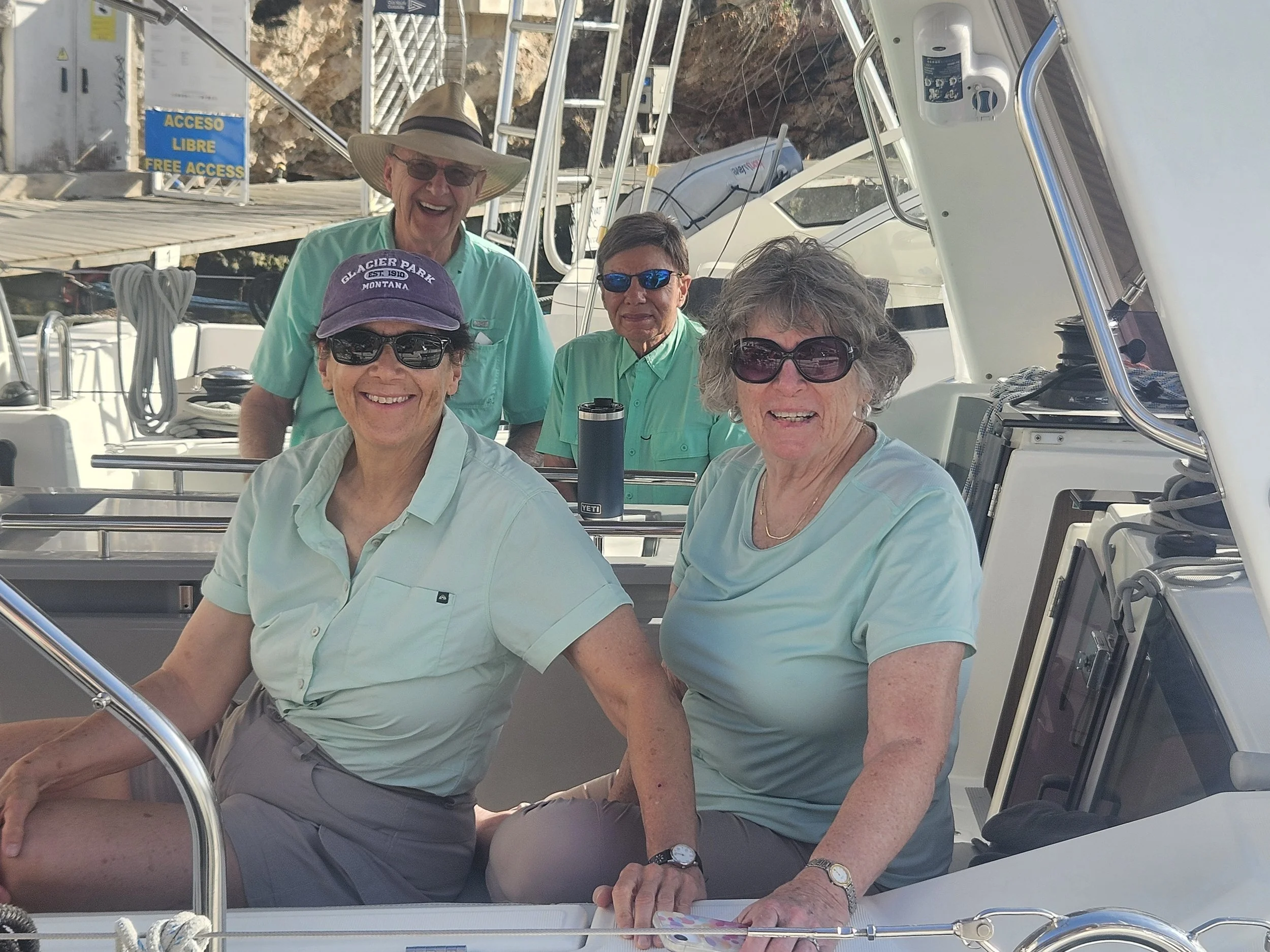
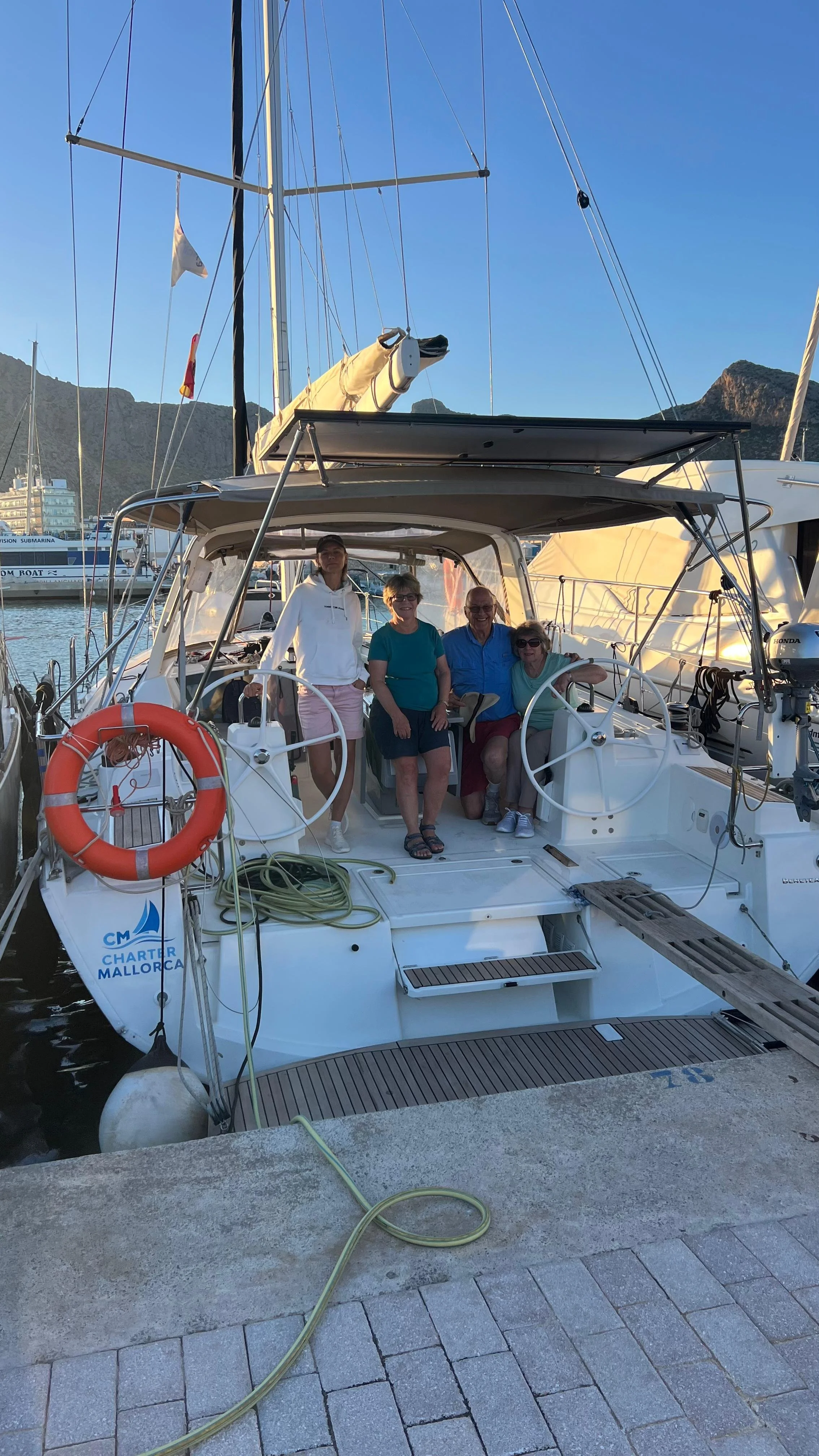
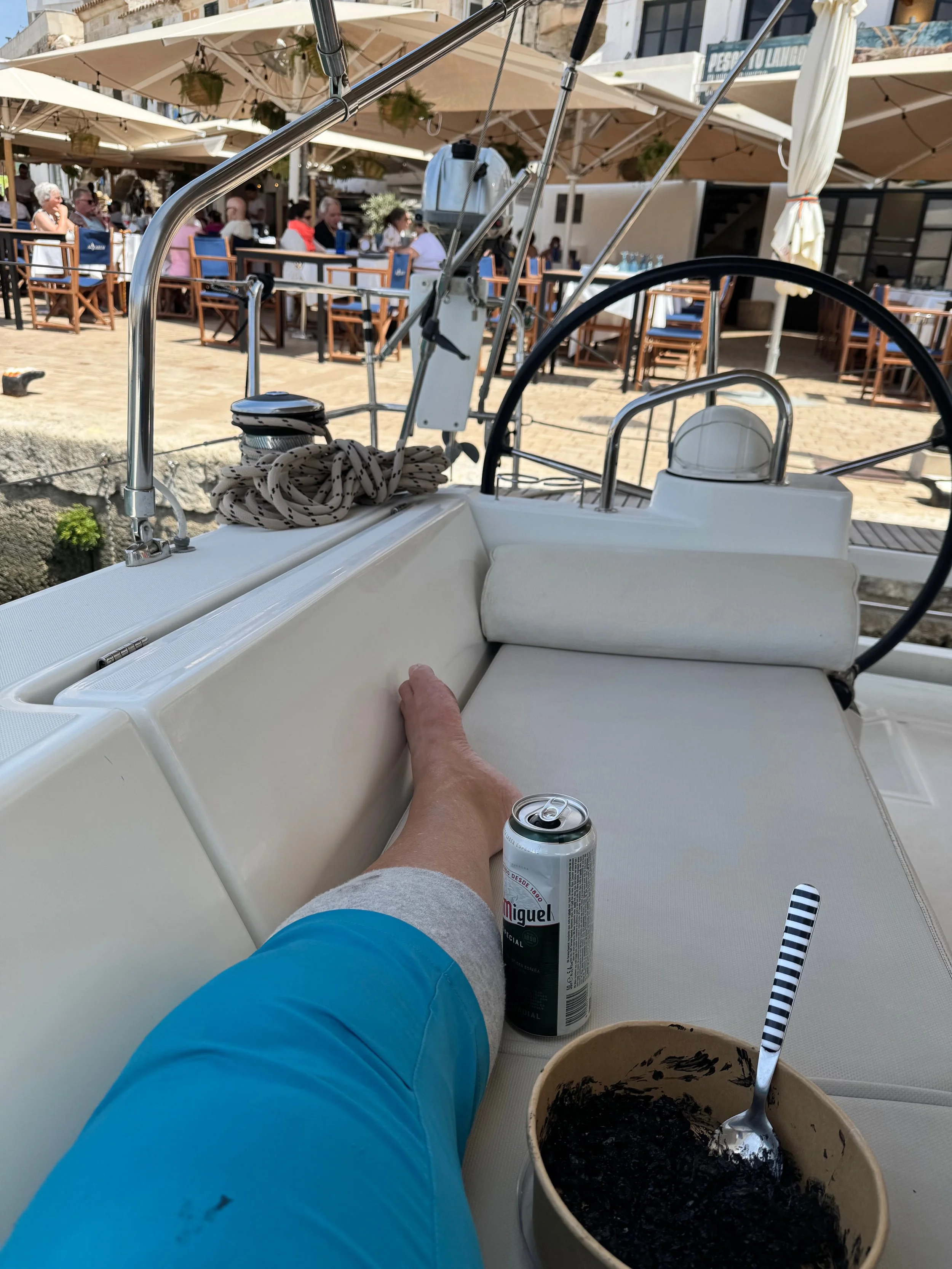
And then it was Friday and we had to get back to Port de Pollença where we knew there was room for the boats in the marina where they live. All three crews made the boats ship-shape for sailing and we waved farewell to the wharf in Ciudadella.
The 30-ish mile sail back to Mallorca was great. The winds had moderated a little, but remained steady from the north, giving us a comfortable reach most of the way. Once inside the Bay of Pollença it got fluky, but we still managed to sail all the way in to just outside the marina where we lowered sails and proceeded to the fuel dock. The charter company guys met us there and then over at our spot on the dock to catch our lines and direct us as we backed in.
We had just gotten settled when the charter company guys asked to come aboard to check in the boats. They went through the checklist we’d used at the start and asked all kinds of questions. They raised the main and pulled out the jib. They inspected the dinghy (which we never used) and started both the outboard engine and the boat’s engine. Any sense of ownership of the boat we’d developed during the week vanished as they retook possession. But they did need to turn the boats around by 4:00 p.m. the next day. And in fact, they were back helping us unload luggage at 9:00 a.m. sharp the next morning. Fortunately, everyone was ready to vacate.
And so we parted ways, some to fly back to the US, some to stay on the island a little longer, some to other European destinations. We never did have that appetizer party with all boats, but somehow all the mixing of crews while on Menorca had the same unifying effect.
Mediterranean sailing can be challenging when the Mistral blows, and we came away with the impression that the swells we experienced at anchor are actually more common than not, so you just have to get used to them. But despite the limited ports and sailing we did on this trip, we returned from the trip feeling satisfied by a wonderful experience in Spain.
Thanks to Judy Dunbar, Ann Pollock, and Mia McCroskey for photos.